Hexachlorocyclotriphosphazene → Sodium Chloride
Reaction equation

[O-:1][C:2]1[CH:7]=[CH:6][CH:5]=[CH:4][CH:3]=1.[Na+:8].[Cl:9][P:10]1([Cl:20])[N:15]=[P:14](Cl)(Cl)[N:13]=[P:12](Cl)(Cl)[N:11]=1>C1COCC1>[O:1]([P:14]1([O:1][C:2]2[CH:7]=[CH:6][CH:5]=[CH:4][CH:3]=2)[N:15]=[P:10]([Cl:20])([Cl:9])[N:11]=[P:12]([O:1][C:2]2[CH:7]=[CH:6][CH:5]=[CH:4][CH:3]=2)([O:1][C:2]2[CH:7]=[CH:6][CH:5]=[CH:4][CH:3]=2)[N:13]=1)[C:2]1[CH:7]=[CH:6][CH:5]=[CH:4][CH:3]=1.[Na+:8].[Cl-:9]Participants
5
Reactant 2

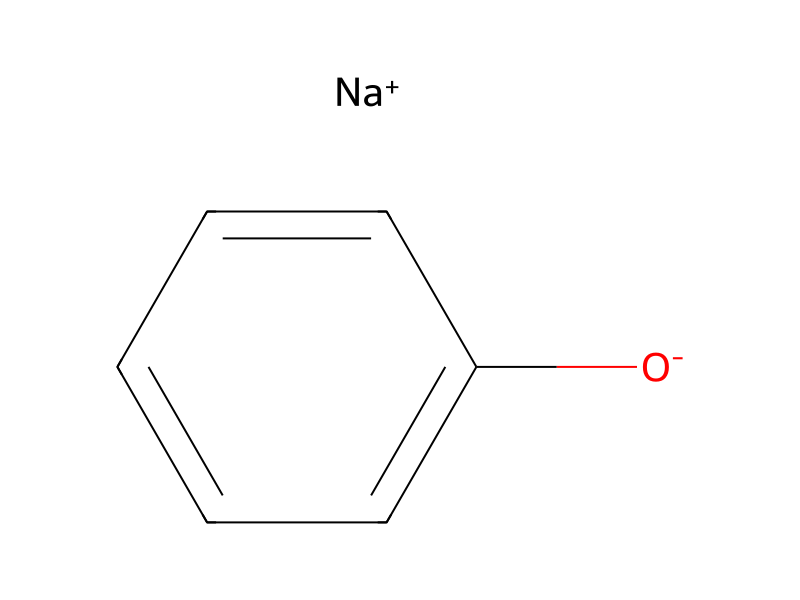
Product 2


Reagents, catalysts & solvents 1

Procedure
The sodium phenoxide containing solution was added dropwise to a solution of hexachlorocyclotriphosphazene, (NPCl2)3 (17.3 g, 0.05 mole) in THF (200 mL) with stirring, under nitrogen. An exothermic reaction occurred as precipitation of a white solid (NaCl) took place. The reaction mixture was refluxed for about 3 hrs. The resulting mixture could be filtered, giving a THF solution of tetraphenoxy-dichlorocyclotriphosphazene as the filtrate, and NaCl as the filtered residue, or used as is. The weight of NaCl isolated after filtration and washing with THF was essentially quantitative (about 7.4 g in this case).
Workup
- customAn exothermic reaction
- customoccurred as precipitation of a white solid (NaCl)
- temperatureThe reaction mixture was refluxed for about 3 hrs
- filtrationThe resulting mixture could be filtered
Sources & evidence
- ORD record
- ord-d24caf6f438247c0a4a4e7948d88e0a8
- Source dataset
- uspto-grants-1988_05
- Patent number
- US04745206
Reaction notes
Loading…