HCID 178472427, compound → HCID 178472426, compound
Reaction equation

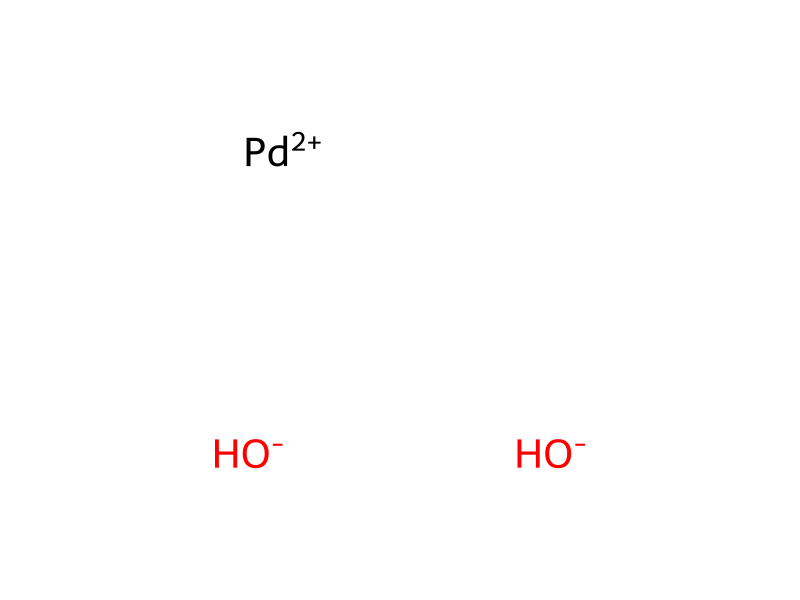
[CH2:1]([O:3][C:4]([C@H:6]1[CH2:11][CH2:10][C@H:9]([NH:12][C:13]2[C:18]([N+:19]([O-])=O)=[CH:17][N:16]=[C:15]3[N:22]([S:25]([C:28]4[CH:33]=[CH:32][CH:31]=[CH:30][CH:29]=4)(=[O:27])=[O:26])[CH:23]=[CH:24][C:14]=23)[CH2:8][CH2:7]1)=[O:5])[CH3:2]>C(O)(=O)C.[OH-].[Pd+2].[OH-]>[CH2:1]([O:3][C:4]([C@H:6]1[CH2:11][CH2:10][C@H:9]([NH:12][C:13]2[C:18]([NH2:19])=[CH:17][N:16]=[C:15]3[N:22]([S:25]([C:28]4[CH:29]=[CH:30][CH:31]=[CH:32][CH:33]=4)(=[O:27])=[O:26])[CH:23]=[CH:24][C:14]=23)[CH2:8][CH2:7]1)=[O:5])[CH3:2]Participants
Reactant 1

Product 1

Reagents, catalysts & solvents 2

Conditions
- Temperature
- 50 °C
Procedure
Palladium hydroxide (20% wt on carbon, 2.5 g) was added to a solution of trans 4-(1-benzenesulfonyl-5-nitro-1H-pyrrolo[2,3-b]pyridin-4-ylamino)-cyclohexane carboxylic acid ethyl ester (assumed to be 44.4 mmol) in acetic acid (150 mL) under nitrogen. The reaction was evacuated and purged with hydrogen and the reaction warmed to 50° C. for 8 hours. The reaction vessel was recharged with hydrogen gas and stirred at room temperature for 18 hours. The mixture was then filtered through Celite® and the filtrate concentrated to dryness under vacuum. The resulting residue was partitioned between DCM and sodium hydrogen carbonate (sat. aq.), the organic layer dried with sodium sulphate and concentrated under vacuum. The residue was purified by column chromatography on silica gel (eluting: ethyl acetate) to give 16.2 g (83%) of trans 4-(5-amino-1-benzenesulfonyl-1H-pyrrolo[2,3-b]pyridin-4-ylamino)-cyclohexanecarboxylic acid ethyl ester as a purple solid. 1H NMR (400 MHz, CDCl3) δ: 8.13 (m, 2H), 7.83 (s, 1H), 7.53 (m, 1H), 7.45 (m, 3H), 6.54 (d, 1H), 4.75 (br s, 1H), 4.14 (q, 2H), 3.68 (m, 1H), 2.65 (br s, 2H), 2.32 (m, 1H), 2.20 (m, 2H), 2.09 (m, 2H), 1.63 (m, 2H), 1.33-1.20 (m, 5H).
Workup
- customThe reaction was evacuated
- custompurged with hydrogen
- filtrationThe mixture was then filtered through Celite®
- concentrationthe filtrate concentrated to dryness under vacuum
- customThe resulting residue was partitioned between DCM and sodium hydrogen carbonate (sat. aq.)
- dry with materialthe organic layer dried with sodium sulphate
- concentrationconcentrated under vacuum
- customThe residue was purified by column chromatography on silica gel (eluting: ethyl acetate)
Sources & evidence
- ORD record
- ord-c1c46f7e2c194779a736808c04a13f61
- Source dataset
- uspto-grants-2013_06
- Patent number
- US08461328B2
Reaction notes
Loading…