Naphthalene → 2-methyl-1-(1-naphthalenyl)-1-propanone
Reaction equation

[Cl-].[Al+3].[Cl-].[Cl-].[CH:5]1[C:14]2[C:9](=[CH:10][CH:11]=[CH:12][CH:13]=2)[CH:8]=[CH:7][CH:6]=1.[C:15](Cl)(=[O:19])[CH:16]([CH3:18])[CH3:17]>ClCCl>[CH3:17][CH:16]([CH3:18])[C:15]([C:13]1[C:14]2[C:9](=[CH:8][CH:7]=[CH:6][CH:5]=2)[CH:10]=[CH:11][CH:12]=1)=[O:19]Participants
Reactant 3

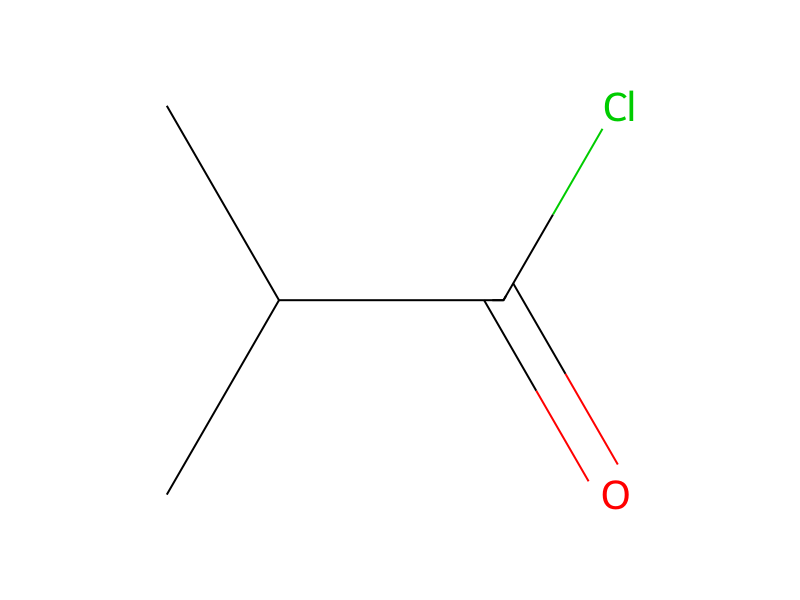

Product 1

Reagents, catalysts & solvents 1

Conditions
- Temperature
- -30 °C
Procedure
Aluminium chloride (28.0 g, 0.21 mole) was suspended in 200 ml of anhydrous dichloromethane and was cooled to −30° C. A solution of naphthalene (25.6 g, 0.2 mole) and isobutyryl chloride (21.3 g, 0.20 mole) in 50 ml of anhydrous dichloromethane was slowly added to this suspension. After the addition was completed, the reaction mixture was stirred at −30° C. for 1 h. The reaction mixture was then allowed to warm up to room temperature. The reaction mixture was poured onto 300 g of ice water, and the organic layer was separated. The organic layer was successively washed twice with a 5 wt % aqueous hydrochloric acid solution (150 ml) and once with a 2 wt % aqueous sodium bicarbonate solution (150 ml). After drying over anhydrous magnesium sulfate the solution was concentrated under reduced pressure. The yield of 2-methyl-1-(1-naphthalenyl)-1-propanone was 39.7 g or 98%.
Workup
- additionAfter the addition
- temperatureto warm up to room temperature
- customthe organic layer was separated
- washThe organic layer was successively washed twice with a 5 wt % aqueous hydrochloric acid solution (150 ml) and once with a 2 wt % aqueous sodium bicarbonate solution (150 ml)
- dry with materialAfter drying over anhydrous magnesium sulfate the solution
- concentrationwas concentrated under reduced pressure
Sources & evidence
- ORD record
- ord-e153ca799fca48c9a5f88c195b823fc6
- Source dataset
- uspto-grants-2003_04
- Patent number
- US06548710B2
Reaction notes
Loading…