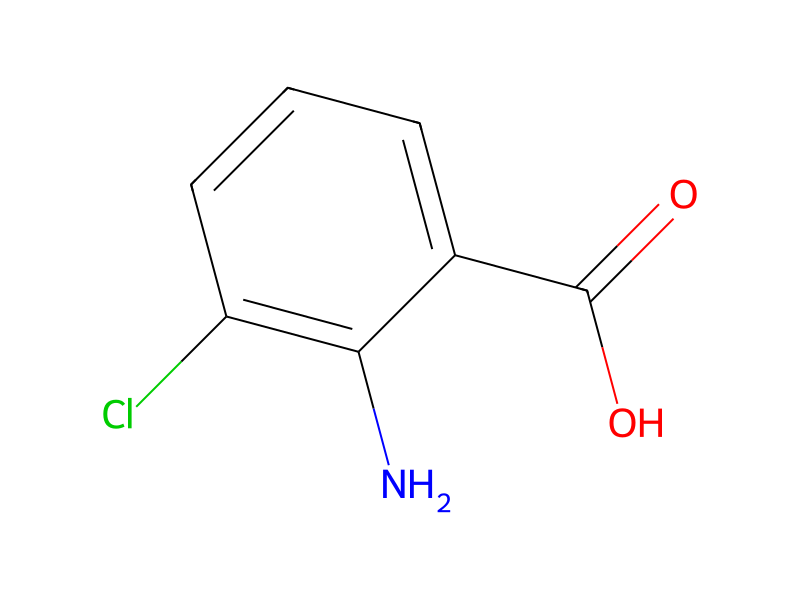
2-Amino-3-chlorobenzoic acid → 3-chloro-2-[3-(3-chloro-propyl)-ureido]-benzoic Acid
Reaction equation

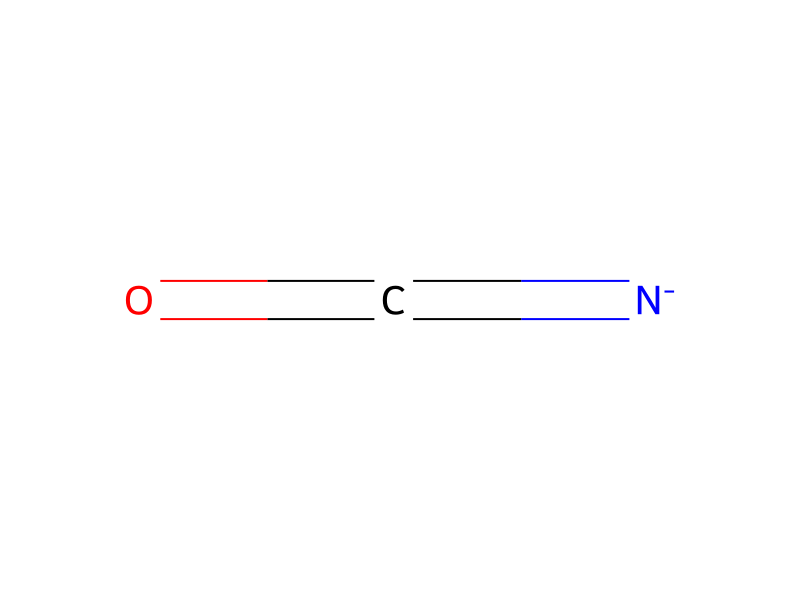
[NH2:1][C:2]1[C:10]([Cl:11])=[CH:9][CH:8]=[CH:7][C:3]=1[C:4]([OH:6])=[O:5].[Cl:12][CH2:13][CH2:14][CH2:15][N:16]=[C:17]=[O:18].[N-]=C=O>Cl>[Cl:11][C:10]1[C:2]([NH:1][C:17]([NH:16][CH2:15][CH2:14][CH2:13][Cl:12])=[O:18])=[C:3]([CH:7]=[CH:8][CH:9]=1)[C:4]([OH:6])=[O:5]Participants



Conditions
- Temperature
- 0 °C
Procedure
A 250 mL round bottom flask is charged with 2-amino-3-chlorobenzoic acid (5.00 g, 29.1 mmol) and 100 mL of 5% aqueous KHCO3. The slurry is cooled to 0° C., and 3-chloropropylisocyanate (6.0 mL, 58 mmol) is added. The mixture is then allowed to warm to room temperature over 16 hours. HPLC analysis shows some starting material remaining, so the solution is recooled to 0° C. and an additional portion of the isocyanate (3.0 mL, 29 mmol) is added. After 2 hours, the solution is acidified with 1 N HCl (ca. 40 mL), and the resulting yellow solid is filtered, rinsing with 1 N HCl. The resulting solid (35.5 g) is recrystallized from 80 mL of hot ethanol, to provide the product as a white solid: 4.22 g, 14.5 mmol, 50% yield. M.p. 124.4-124.8° C. 1H NMR (CD3OD): 7.84 (d, J=8, 1H), 7.64 (d, J=8, 1H), 7.24 (t, J=8, 1H), 3.68 (t, J=7, 2H), 3.37 (t, J=6, 2H), 2.01 (m, 2H). MS (Cl): 289 (M−H, 100), 196 (M-ClCH2CH2CH2NH, 25)
Workup
- temperatureto warm to room temperature over 16 hours
- customis recooled to 0° C.
- filtrationthe resulting yellow solid is filtered
- washrinsing with 1 N HCl
- customThe resulting solid (35.5 g) is recrystallized from 80 mL of hot ethanol
Sources & evidence
- ORD record
- ord-765ef128339d4122a638958cc6c92f29
- Source dataset
- uspto-grants-2003_04
- Patent number
- US06552015B2
Reaction notes
Loading…