Ethyl bromopyruvate → 1-Carbethoxycarbonylmethyl-2-amino-3-carbamoyl-quinoxalinium bromide
Reaction equation

[NH2:1][C:2]1[C:11]([C:12](=[O:14])[NH2:13])=[N:10][C:9]2[C:4](=[CH:5][CH:6]=[CH:7][CH:8]=2)[N:3]=1.ClC1C(C(OCC)=O)=NC2C(=CC=CC=2)N=1.[Br:31][CH2:32][C:33](=[O:39])[C:34]([O:36][CH2:37][CH3:38])=[O:35]>C(COC)OC>[Br-:31].[C:34]([C:33]([CH2:32][N+:3]1[C:4]2[C:9](=[CH:8][CH:7]=[CH:6][CH:5]=2)[N:10]=[C:11]([C:12](=[O:14])[NH2:13])[C:2]=1[NH2:1])=[O:39])([O:36][CH2:37][CH3:38])=[O:35]Participants
5
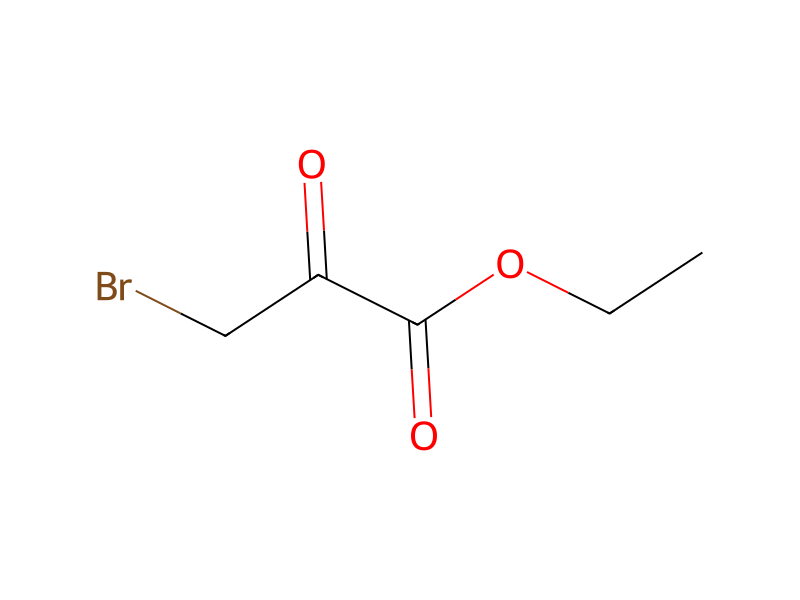



Procedure
A solution of 1 g of 2-amino-3-carbamoyl-quinoxaline prepared from 2-chloro-3-carbethoxy-quinoxaline by the method of Gowenlock et al [J. Chem. Soc., 1945, p. 622-5] in 50 ml of dimethoxy ethane and ethyl bromopyruvate was stirred for 2 days and was filtered to obtain 1.44 g of 1-carbethoxycarbonylmethyl-2-amino-3-carbamoyl-quinoxalinium bromide as a yellow crystalline solid.
Workup
- filtrationwas filtered
Sources & evidence
- ORD record
- ord-fabeff5d55234d1384552be2114d2314
- Source dataset
- uspto-grants-1981_03
- Patent number
- US04254123
Reaction notes
Loading…