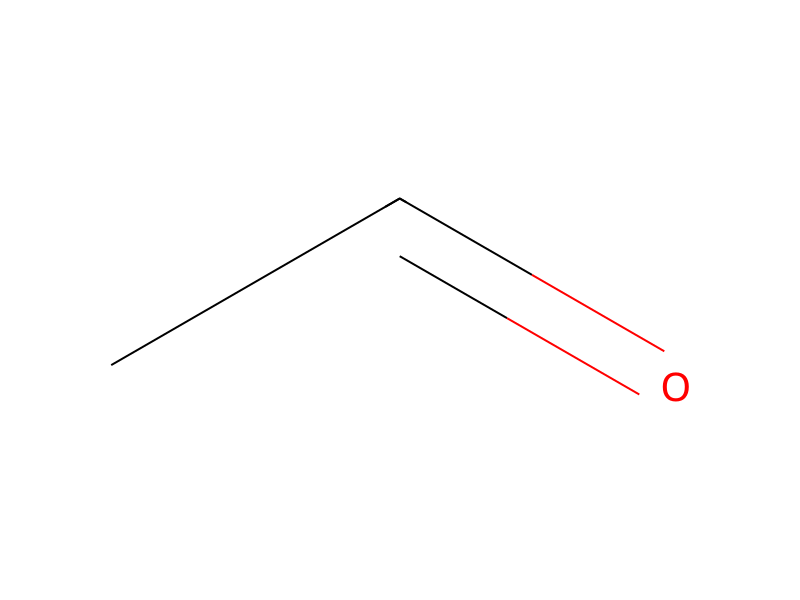
Acetaldehyde → 1-(1-Chloroethyl)-4-(2-methylpropyl)benzene
Reaction equation

[CH2:1]([C:5]1[CH:10]=[CH:9][CH:8]=[CH:7][CH:6]=1)[CH:2]([CH3:4])[CH3:3].[CH:11](=O)[CH3:12].[ClH:14]>[Cl-].[Zn+2].[Cl-]>[CH2:1]([C:5]1[CH:10]=[CH:9][C:8]([CH:11]([Cl:14])[CH3:12])=[CH:7][CH:6]=1)[CH:2]([CH3:4])[CH3:3]Participants
Reactant 3


Product 1

Reagents, catalysts & solvents 1

Procedure
Isobutylbenzene (402 g, 3 mol) and zinc chloride (136 g, 1 mol) are fed into a one liter flask equipped with termometer, stirrer, and gas inlet tube. The reaction is maintained below 10° C. by external cooling. A mixture of acetaldehyde (44 g, 1 mol) and isobutylbenzene (67 g, 0.5 mol) are added to the flask dropwise for 2 hours while maintaining the temperature of the flask below 10° C. The reaction is heated to room temperature and HCl is passed through the reaction medium in the flask for about 2 hours. The reaction is stirred for 6 hours. The solution is quenched with water and the organic layer is separated from the aqueous layer. The organic layer is washed with sodium bicarbonate and water, and then dried. It is then stripped of isobutylbenzene and vacuum distilled to give 1-(4′-isobutylphenyl)ethyl chloride.
Workup
- customequipped with termometer, stirrer, and gas inlet tube
- temperatureThe reaction is maintained below 10° C. by external cooling
- additionare added to the flask dropwise for 2 hours
- temperaturewhile maintaining the temperature of the flask below 10° C
- customThe solution is quenched with water
- customthe organic layer is separated from the aqueous layer
- washThe organic layer is washed with sodium bicarbonate and water
- customdried
- distillationdistilled
Sources & evidence
- ORD record
- ord-0b18df2bd7c14edc82ce41840a621aa1
- Source dataset
- uspto-grants-2003_04
- Patent number
- US06555704B1
Reaction notes
Loading…