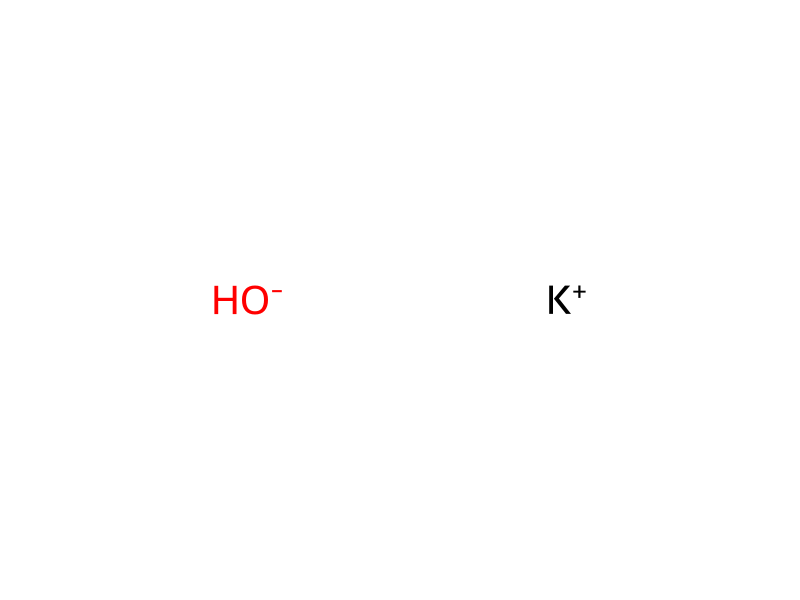
Potassium Hydroxide → 3-[(4-Fluorophenyl)thio]-2-hydroxy-2-methylpropanoic acid
Reaction equation

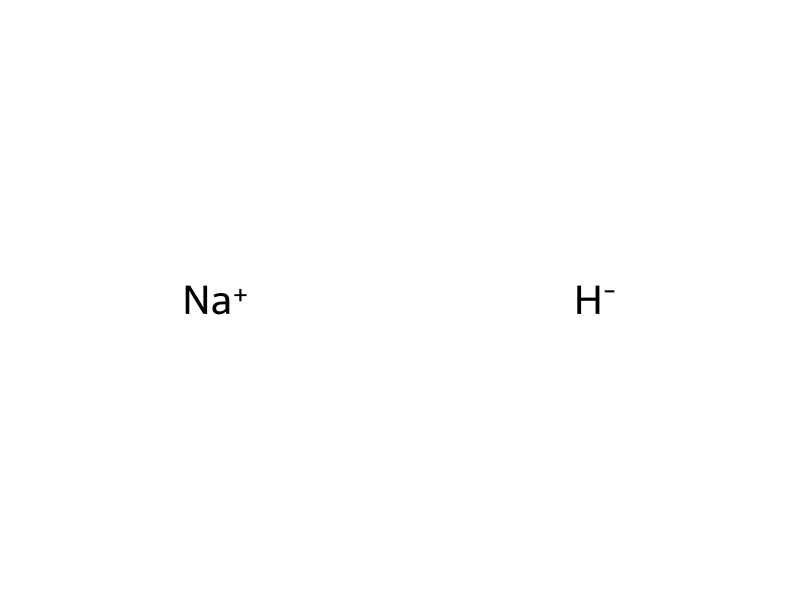
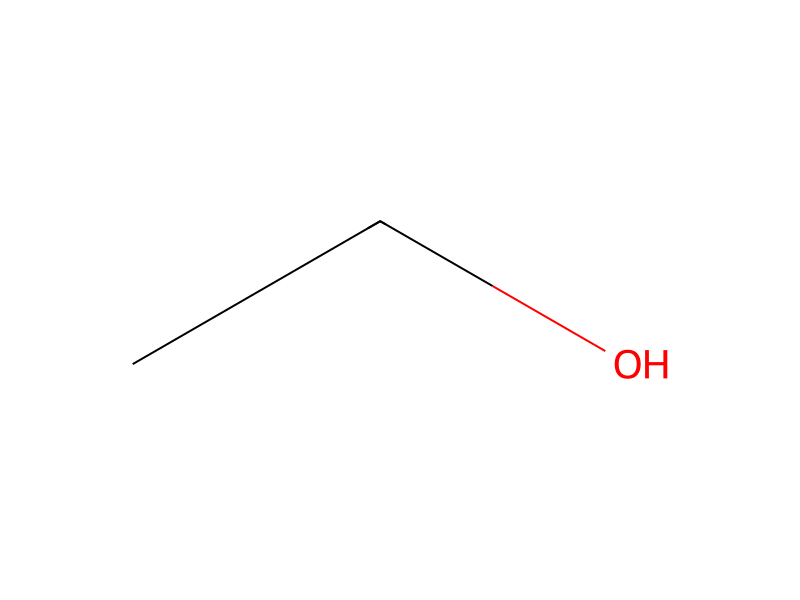
FC1C=CC(S)=CC=1.[H-].[Na+].[OH:11][C:12]([CH3:26])([CH2:17][S:18][C:19]1[CH:24]=[CH:23][C:22]([F:25])=[CH:21][CH:20]=1)[C:13]([O:15]C)=[O:14].[OH-].[K+]>C(O)C>[OH:11][C:12]([CH3:26])([CH2:17][S:18][C:19]1[CH:24]=[CH:23][C:22]([F:25])=[CH:21][CH:20]=1)[C:13]([OH:15])=[O:14]Participants


Procedure
According to the second process disclosed in EP 100172 (Method 2 hereinabove) the starting material was methyl methacrylate, which can be converted into epoxide only under harsh conditions (i.e. with peracetic acid in ethyl acetate at 75° C. [J. Am. Chem., 81, 680 (1959)], or with 90% hydrogen peroxide—trifluoroacetic anhydride at 40° C. [J. Am. Chem., 77, 89 (1955)], or with MCPBA in dichloromethane at ° C. in low yield [J. Med. Chem., 29. 2184 (1986)]. The epoxidation under the above mentioned conditions can be explosive. The methyl 2-methyl-oxirane-carboxylate of formula (5), which was obtained by epoxidation, was reacted with 4-fluorothiophenol in the presence of sodium hydride. The obtained methyl 2-hydroxy-2-methyl-3-(4-fluorophenylthio)-propionate of formula (6) was hydrolyzed with potassium hydroxide in aqueous ethanol over a period of 22 h to yield the 2-hydroxy-2-methyl-3-(4-fluorophenylthio)-propionic acid of formula (7), which was converted into acid chloride of formula (8) with thionyl chloride in dimethyl acetamide at −15° C. The obtained acid chloride was reacted with 4-amino-2-trifluoromethyl-benzonitrile in dimethylacetamide at −15° C. to yield the thioether derivative of formula (II), which was given in the reaction scheme of Method 1. The oxidation of the thioether derivative was carried out according to the reaction scheme of Method 1.
Sources & evidence
- ORD record
- ord-e50cfc869d30496bac4365deb2ee8794
- Source dataset
- uspto-grants-2007_04
- Patent number
- US07199257B1
Reaction notes
Loading…