Ethylene Glycol → 2-(3-Bromophenyl)-1,3-dioxolane
Reaction equation

[Br:1][C:2]1[CH:3]=[C:4]([CH:7]=[CH:8][CH:9]=1)[CH:5]=[O:6].[CH2:10](O)[CH2:11][OH:12].C1(C)C=CC(S(O)(=O)=O)=CC=1>C1(C)C=CC=CC=1>[Br:1][C:2]1[CH:3]=[C:4]([CH:5]2[O:12][CH2:11][CH2:10][O:6]2)[CH:7]=[CH:8][CH:9]=1Participants
5
Reactant 3


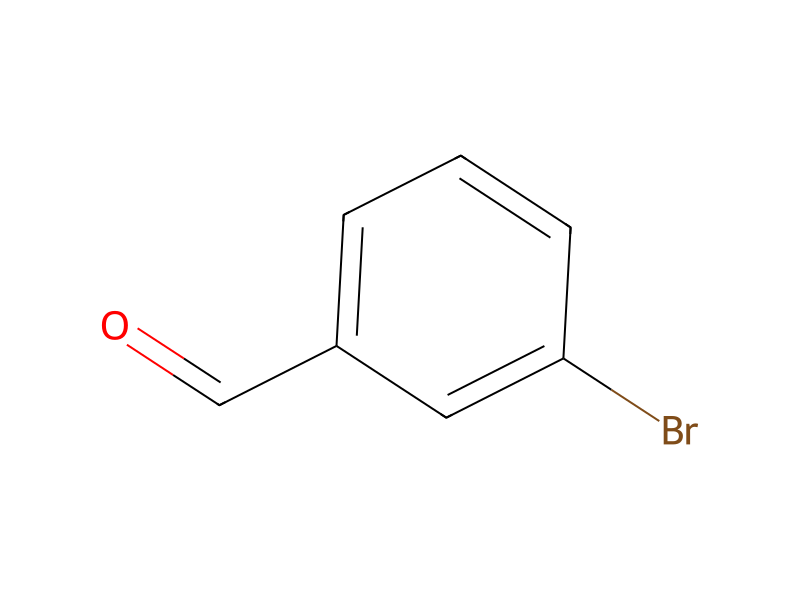
Product 1

Reagents, catalysts & solvents 1

Procedure
To a stirred solution of 3-bromobenzaldehyde (5.00 g, 27.0 mmol) in toluene (35 ml) was added ethylene glycol (4.52 ml, 81.1 mmol) and p-toluenesulphonic acid (0.5 g). The mixture was heated to reflux for 2 hours, cooled, and washed with water and saturated sodium hydrogen carbonate solution. The organic layer was dried over MgSO4. The solvent was removed under reduced pressure to give the desired product as a colourless oil (6.22 g, 100%). δH (CDCl3) 4.09 (4H, m), 5.79 (1H, s), 7.2-7.7 (4H) ppm.
Workup
- temperatureThe mixture was heated
- temperatureto reflux for 2 hours
- temperaturecooled
- washwashed with water and saturated sodium hydrogen carbonate solution
- dry with materialThe organic layer was dried over MgSO4
- customThe solvent was removed under reduced pressure
Sources & evidence
- ORD record
- ord-29826425134847518dc54a5ed791944f
- Source dataset
- uspto-grants-2000_12
- Patent number
- US06156774
Reaction notes
Loading…