Acetyl chloride → HCID 178501740, compound
Reaction equation

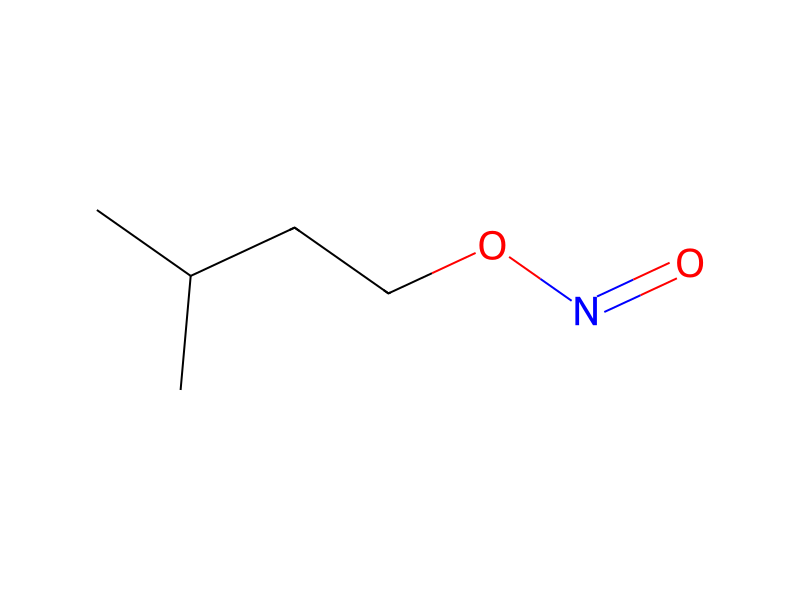
[Cl:1][CH:2]([F:10])[C:3](=[O:9])[CH2:4][C:5]([O:7][CH3:8])=[O:6].C([O:16][N:17]=O)CC(C)C.C(Cl)(=O)C.C(=O)(O)[O-].[Na+]>ClCCl.O>[Cl:1][CH:2]([F:10])[C:3](=[O:9])[C:4](=[N:17][OH:16])[C:5]([O:7][CH3:8])=[O:6]Participants
7
Reactant 4



Product 1

Reagents, catalysts & solvents 2


Procedure
To a solution of methyl 4-chloro-4-fluoro-3-oxobutyrate (31 g) and isopentylnitrite (25.8 ml) in dichloromethane (120 ml) was added dropwise acetylchloride (13 ml) under ice-cooling with stirring and the mixture was stirred for 3 hours at 5° C. to 10° C. The resulting solution was poured into water (300 ml) and adjusted to pH 3.0 with saturated aqueous sodium bicarbonate. The separated organic phase was washed with water (300 ml) and dried with magnesium sulfate and evaporated in vacuo to give methyl 4-chloro-4-fluoro-2-(hydroxyimino)-3-oxobutyrate.
Workup
- temperaturecooling
- stirringthe mixture was stirred for 3 hours at 5° C. to 10° C
- washThe separated organic phase was washed with water (300 ml)
- dry with materialdried with magnesium sulfate
- customevaporated in vacuo
Sources & evidence
- ORD record
- ord-703d1bb5391b40f5a9b3c84234edf953
- Source dataset
- uspto-grants-2000_12
- Patent number
- US06159961
Reaction notes
Loading…