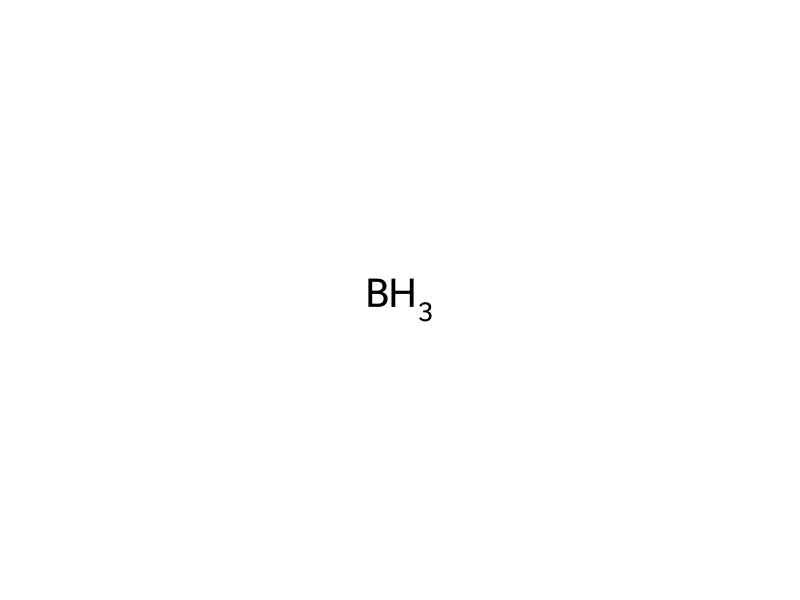
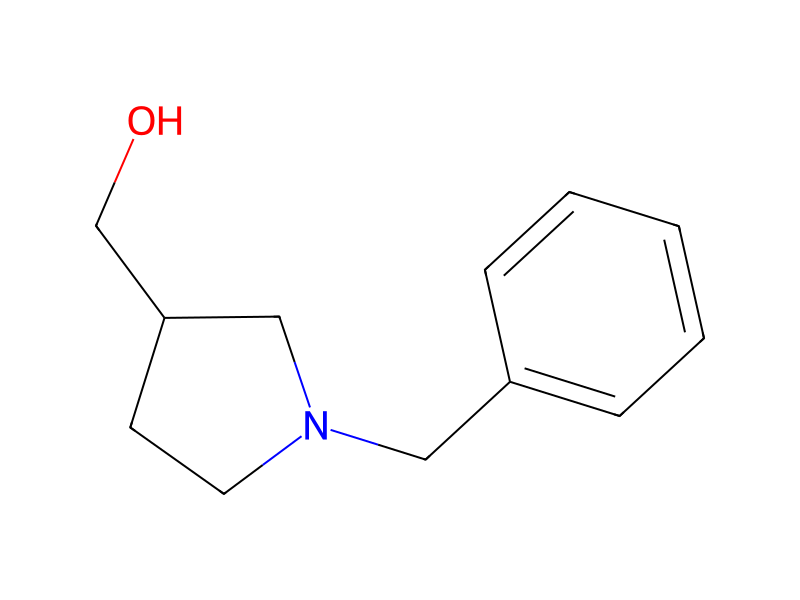
Borane → (1-Benzylpyrrolidin-3-yl)methanol
Reaction equation

C[O:2][C:3]([CH:5]1[CH2:9][C:8](=O)[N:7]([CH2:11][C:12]2[CH:17]=[CH:16][CH:15]=[CH:14][CH:13]=2)[CH2:6]1)=O.[H-].[Al+3].[Li+].[H-].[H-].[H-].B>>[CH2:11]([N:7]1[CH2:8][CH2:9][CH:5]([CH2:3][OH:2])[CH2:6]1)[C:12]1[CH:17]=[CH:16][CH:15]=[CH:14][CH:13]=1Participants
4


Procedure
Reduction of 1-benzyl-5-oxo-pyrrolidine-3-carboxylic acid methyl ester 11 with a suitable reducing agent (such as lithium aluminum hydride, borane, and the like) gives N-benzyl-3-hydroxymethylpyrrolidine 12. Removal of the benzyl group under catalytic hydrogenation reaction conditions followed by reaction of 3-hydroxymethylpyrrole 13 with di-tert-butyl dicarbonate in the presence of a base (e.g., sodium hydroxide, sodium carbonate, and the like) gives N-tert-butoxycarbonyl-3-hydroxymethylpyrrolidine of Formula (Ic). Compound (Ic) is then converted to a compound of Formula (I) as shown below.
Sources & evidence
- ORD record
- ord-4d27086bc14a445da91f411db82350d1
- Source dataset
- uspto-grants-2000_12
- Patent number
- US06166015
Reaction notes
Loading…