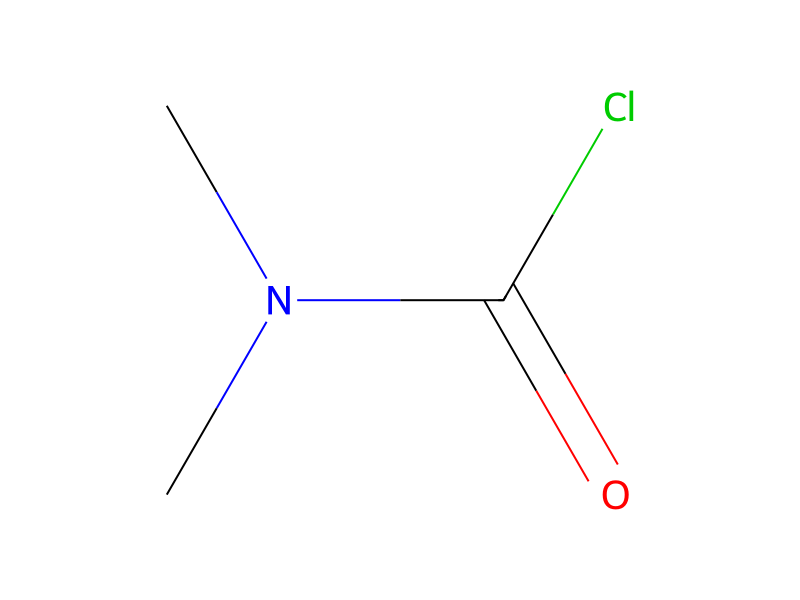
Dimethylcarbamoyl Chloride → HCID 12774072, compound
Reaction equation

[F:1][C:2]([F:22])([F:21])[C:3]1[CH:4]=[C:5]([CH:7]=[CH:8][C:9]=1[O:10][C:11]1[CH:20]=[CH:19][C:18]2[C:13](=[CH:14][CH:15]=[CH:16][CH:17]=2)[CH:12]=1)[NH2:6].[OH-].[Na+].[CH3:25][N:26]([CH3:30])[C:27](Cl)=[O:28]>C1(C)C=CC=CC=1>[F:1][C:2]([F:21])([F:22])[C:3]1[CH:4]=[C:5]([NH:6][C:27](=[O:28])[N:26]([CH3:30])[CH3:25])[CH:7]=[CH:8][C:9]=1[O:10][C:11]1[CH:20]=[CH:19][C:18]2[C:13](=[CH:14][CH:15]=[CH:16][CH:17]=2)[CH:12]=1Participants
5
Reactant 3


Product 1

Reagents, catalysts & solvents 1

Procedure
3-Trifluoromethyl-4-(2-naphthyloxy)aniline (9.1 g) was dissolved in 200 ml of toluene, and 30 ml of 40% aqueous sodium hydroxide solution and 6.5 g of N,N-dimethylcarbamyl chloride were added thereto. The reaction mixture was heated under reflux for 10 hours and then cooled to room temperature. The toluene layer was washed with water, the solvent was removed by distillation under reduced pressure and the residue was recrystallized from ethanol to obtain 5.1 g of N'-[3-trifluoromethyl-4-(2-naphthyloxy)phenyl]-N,N-dimethylurea as white needles. M.P. 210°-211° C.
Workup
- temperatureThe reaction mixture was heated
- temperatureunder reflux for 10 hours
- washThe toluene layer was washed with water
- customthe solvent was removed by distillation under reduced pressure
- customthe residue was recrystallized from ethanol
Sources & evidence
- ORD record
- ord-40a06a92e9d447a5a5dcbcf8ff72b7b9
- Source dataset
- uspto-grants-1981_07
- Patent number
- US04280835
Reaction notes
Loading…