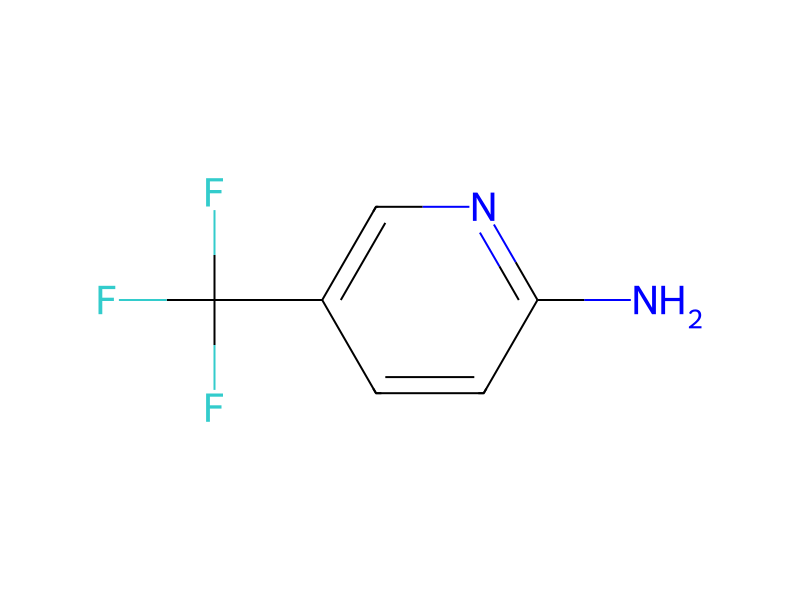
2-Amino-5-(trifluoromethyl)pyridine → 1-(2,6-Difluorobenzoyl)-3-(5-trifluoromethyl-2-pyridinyl)urea
Reaction equation

[F:1][C:2]([F:11])([F:10])[C:3]1[CH:4]=[CH:5][C:6]([NH2:9])=[N:7][CH:8]=1.[F:12][C:13]1[CH:33]=[CH:32][CH:31]=[C:30]([F:34])[C:14]=1[C:15]([NH:17][C:18](OC1C=CC([N+]([O-])=O)=CC=1)=[O:19])=[O:16]>>[F:12][C:13]1[CH:33]=[CH:32][CH:31]=[C:30]([F:34])[C:14]=1[C:15]([NH:17][C:18]([NH:9][C:6]1[CH:5]=[CH:4][C:3]([C:2]([F:1])([F:10])[F:11])=[CH:8][N:7]=1)=[O:19])=[O:16]Participants
3


Procedure
A portion of 5-trifluoromethyl-2-aminopyridine is dissolved in an inert organic solvent, and to the solution is added a portion of 2,6-difluorobenzamidocarboxylic acid, 4-nitrophenyl ester. The reaction mixture is stirred at elevated temperature for a period of time, after which the reaction mixture is evaporated to dryness under vacuum, and the product named in the heading above, identical to the product of Example 1, is isolated by recrystallization.
Workup
- customafter which the reaction mixture is evaporated to dryness under vacuum
- customis isolated by recrystallization
Sources & evidence
- ORD record
- ord-b3145ff5191d4589bee3f52e36913bba
- Source dataset
- uspto-grants-1981_07
- Patent number
- US04281003
Reaction notes
Loading…