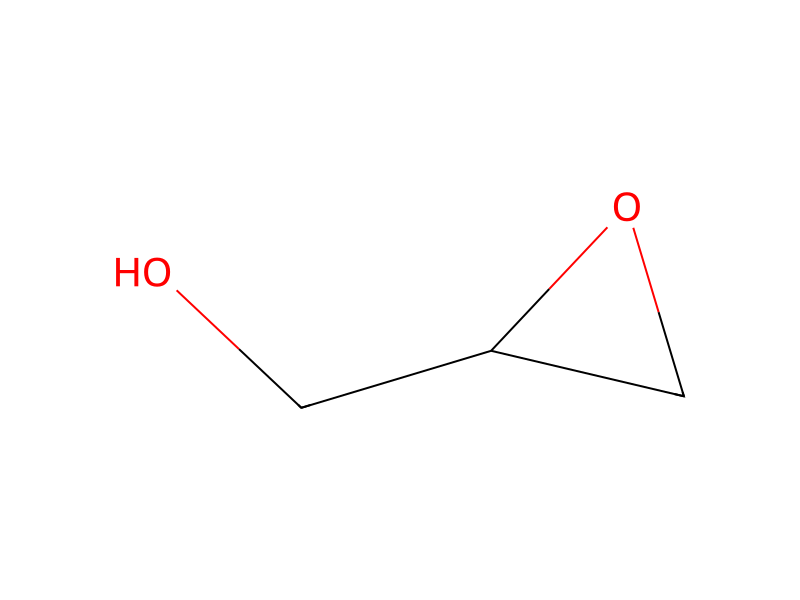
Glycidol → 1-(Hypoxanthine-9-yl)-2,3-propandiol
Reaction equation

[NH:1]1[C:9](=[O:10])[C:8]2[NH:7][CH:6]=[N:5][C:4]=2[N:3]=[CH:2]1.[CH2:11]1[O:13][CH:12]1[CH2:14][OH:15].C(=O)([O-])[O-].[K+].[K+]>>[NH:1]1[C:9](=[O:10])[C:8]2[N:7]=[CH:6][N:5]([CH2:11][CH:12]([OH:13])[CH2:14][OH:15])[C:4]=2[N:3]=[CH:2]1Participants
4



Procedure
Hypoxanthine is treated as in the procedure of Example 1 with glycidol in the presence of potassium carbonate to give 1-(hypoxanthine-9-yl)-2,3-propandiol. The resulting 1-(9-hypoxanthine)-2,3-propandiol is treated with dimethoxytrityl chloride in pyridine as in Example 2 to give 1-(9-hypoxan-thine)-3-O-dimethoxytrityl-2-propanol. The resulting 1-(9-hypoxanthine)-3-O-dimethoxytrityl-2-propanol is phosphitylated with chloro-β-cyanoethoxy-N,N-diisopropylaminophosphine as per Example 3 to give the title compound.
Sources & evidence
- ORD record
- ord-5c2b12ddabfb4312a975e3d28b97199d
- Source dataset
- uspto-grants-2002_09
- Patent number
- US06448373B1
Reaction notes
Loading…