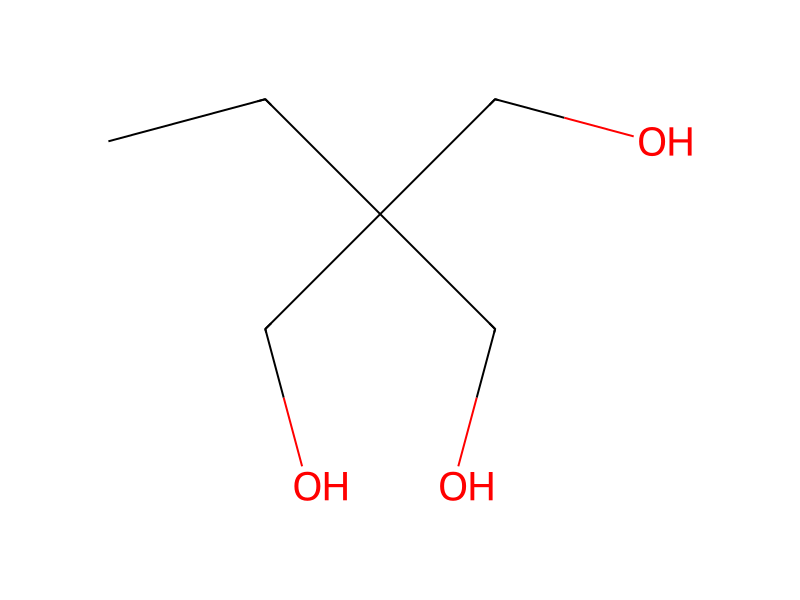
Formaldehyde → Trimethylolpropane
Reaction equation

C=O.[CH2:3]([C:5]([CH2:10][OH:11])([CH2:8][CH3:9])[CH:6]=[O:7])[OH:4]>>[CH2:3]([C:5]([CH2:10][OH:11])([CH2:6][OH:7])[CH2:8][CH3:9])[OH:4]Participants
3


Procedure
EP-A 860 419, too, proposes carrying out the preparation of 2,2-dimethylolbutanal from n-butyraldehyde and formaldehyde in a plurality of stages, with the actual reaction occurring in the first stage and the 2-ethylacrolein obtained as by-product being reacted with further formaldehyde in the second stage. The 2,2-dimethylolbutanal prepared in this way can then be hydrogenated to give trimethylolpropane. Once again, no formate is isolated.
Sources & evidence
- ORD record
- ord-ba6d4dcd2b1044a7b3b416a567079934
- Source dataset
- uspto-grants-2002_09
- Patent number
- US06448455B1
Reaction notes
Loading…