Phenylacetyl chloride → HCID 15449592, compound
Reaction equation

[Cl:1][C:2]1[CH:3]=[C:4]([CH:8]([CH2:10][C:11]([OH:13])=[O:12])[NH2:9])[CH:5]=[CH:6][CH:7]=1.C(N(CC)CC)C.[C:21]1([CH2:27][C:28](Cl)=[O:29])[CH:26]=[CH:25][CH:24]=[CH:23][CH:22]=1>O.CC(C)=O>[C:21]1([CH2:27][C:28]([NH:9][CH:8]([C:4]2[CH:5]=[CH:6][CH:7]=[C:2]([Cl:1])[CH:3]=2)[CH2:10][C:11]([OH:13])=[O:12])=[O:29])[CH:26]=[CH:25][CH:24]=[CH:23][CH:22]=1Participants
5
Reactant 3
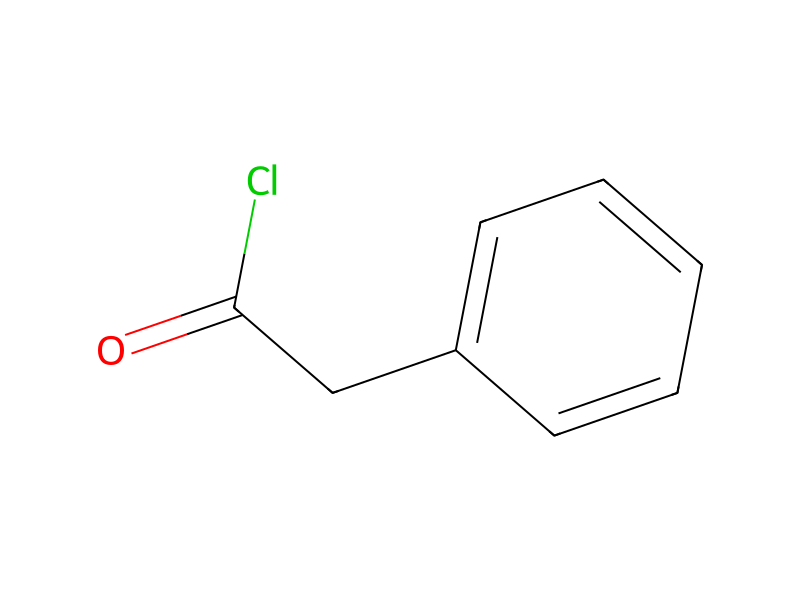


Product 1

Reagents, catalysts & solvents 1

Conditions
- Temperature
- -5 °C
Procedure
To a solution, in a 3/1 mixture of water/acetone, of 10 mmol of (±)-3-(3-chlorophenyl)-β-alanine described in Step A of Example 1 there are added 24 mmol of triethylamine and then, at −5° C., 13 mmol of phenylacetyl chloride. After stirring for 2 hours at −5° C. and then for 3 hours at ambient temperature, the solution is filtered; the acetone is evaporated off, the aqueous phase is washed with ether and is then acidified to pH=1 and extracted with ethyl acetate. The combined organic phases are dried and then evaporated. The residue obtained is washed with hexane, precipitated in a minimum of ether and then filtered to yield the expected product.
Workup
- customat −5° C.
- waitfor 3 hours at ambient temperature
- filtrationthe solution is filtered
- customthe acetone is evaporated off
- washthe aqueous phase is washed with ether
- extractionextracted with ethyl acetate
- customThe combined organic phases are dried
- customevaporated
- customThe residue obtained
- washis washed with hexane
- customprecipitated in a minimum of ether
- filtrationfiltered
Sources & evidence
- ORD record
- ord-01e397090fdb4e03972c6403e61720d7
- Source dataset
- uspto-grants-2002_09
- Patent number
- US06451789B1
Reaction notes
Loading…