Trichloroacetyl chloride → (RS)-3-benzyl-2,2-dichlorocyclobutanone
Reaction equation

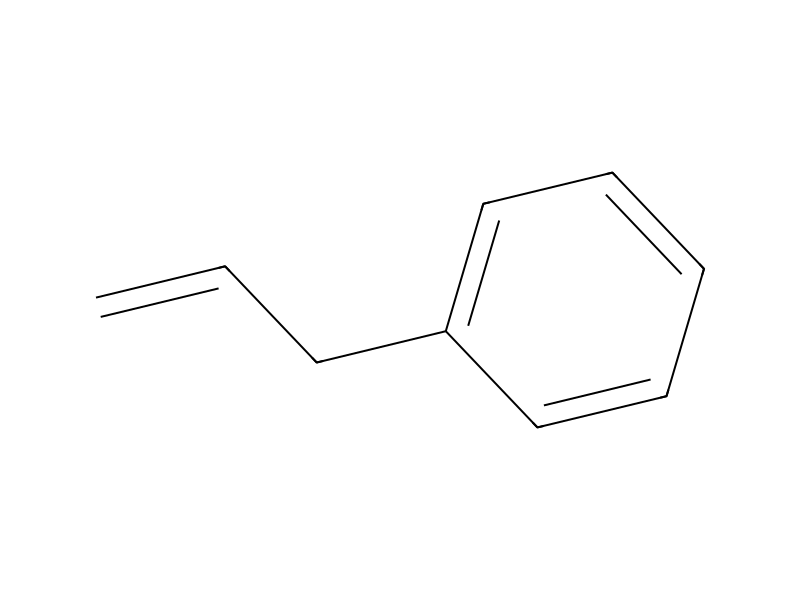
[CH2:1]([C:4]1[CH:9]=[CH:8][CH:7]=[CH:6][CH:5]=1)[CH:2]=[CH2:3].[Cl:10][C:11]([Cl:16])(Cl)[C:12](Cl)=[O:13].P(Cl)(Cl)(Cl)=O>C(OCC)C.[Cu].[Zn]>[CH2:1]([CH:2]1[CH2:3][C:12](=[O:13])[C:11]1([Cl:16])[Cl:10])[C:4]1[CH:9]=[CH:8][CH:7]=[CH:6][CH:5]=1Participants





Procedure
To a room temperature mixture containing allylbenzene (1.84 g, 15.6 mmol), zinc-copper couple (5.1 g, 78 mmol) and diethylether (60 ml) was added dropwise a solution of trichloroacetylchloride (2.96 ml, 26.5 mmol) and phosphorus oxychloride (2.46 ml, 26.5 mmol) in diethylether (20 ml). The reaction mixture was stirred at room temperature for 1 hour, filtered and the filtrate was partially concentrated. The residue was neutralized with saturated NaHCO3. The aqueous phase was extracted with diethylether. The combined organic phases were washed successively with H2O and brine, dried over Na2SO4, and concentrated. The residue was chromatographed over silica gel (hexane) to provide (RS)-3-benzyl-2,2-dichlorocyclobutanone (0.71 g, 20%) as a yellow oil, MS: m/e=228.1 (M-H+).
Workup
- filtrationfiltered
- concentrationthe filtrate was partially concentrated
- extractionThe aqueous phase was extracted with diethylether
- washThe combined organic phases were washed successively with H2O and brine
- dry with materialdried over Na2SO4
- concentrationconcentrated
- customThe residue was chromatographed over silica gel (hexane)
Sources & evidence
- ORD record
- ord-aed1c7b77c754df9b4747f0e8f78d895
- Source dataset
- uspto-grants-2002_09
- Patent number
- US06451819B2
Reaction notes
Loading…