Water → HCID 23071661, compound
Reaction equation

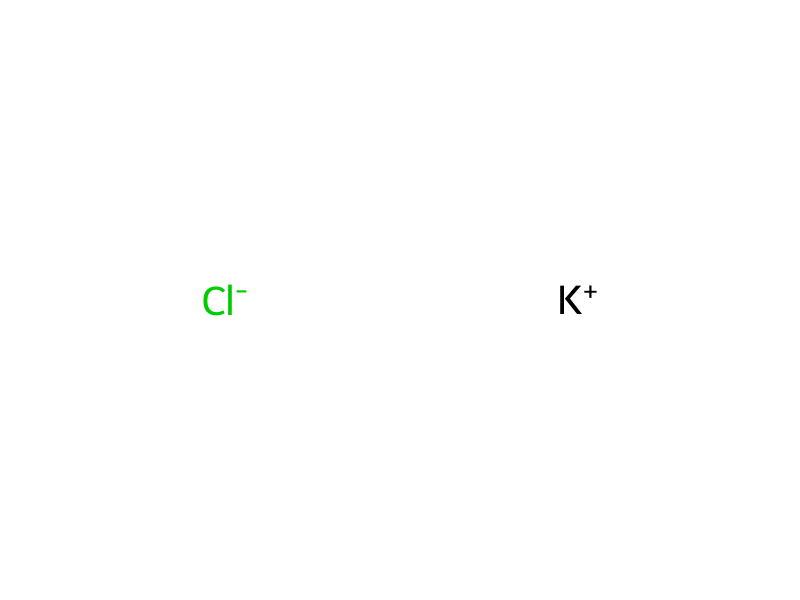
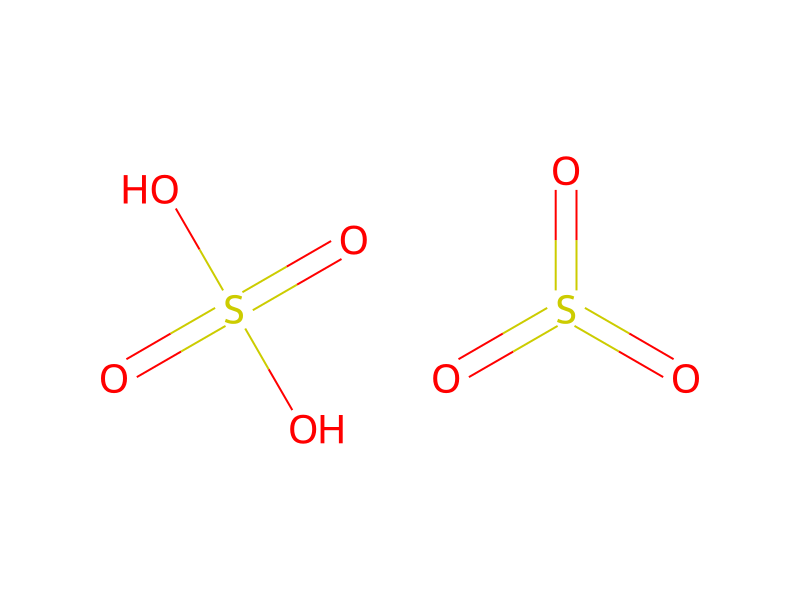
[Cl:1][C:2]1[CH:7]=[CH:6][C:5]([S:8]([C:11]2[CH:16]=[CH:15][C:14]([Cl:17])=[CH:13][CH:12]=2)(=[O:10])=[O:9])=[CH:4][CH:3]=1.O.[Cl-].[K+:20].O[S:22]([OH:25])(=[O:24])=[O:23].[O:26]=[S:27](=[O:29])=[O:28]>>[K+:20].[K+:20].[S:8]([C:11]1[CH:16]=[C:15]([S:27]([O-:29])(=[O:28])=[O:26])[C:14]([Cl:17])=[CH:13][CH:12]=1)([C:5]1[CH:6]=[C:7]([S:22]([O-:25])(=[O:24])=[O:23])[C:2]([Cl:1])=[CH:3][CH:4]=1)(=[O:9])=[O:10]Participants
5



Conditions
- Temperature
- 120 °C
Procedure
57.44 g of bis(4-chlorophenyl)sulfone are dissolved in 60%-oleum in a round-bottomed flask with a drying conduit under cooling with ice and stirring, heated to 120° C., and kept at this temperature overnight. The reaction mixture is added to water and the product is salted out with potassium chloride. It precipitates as a white deposit, is syphoned off, washed with a saturated potassium chloride solution, and recrystallized from ethanol/water (5:4). 65.4 g (62% yield) are obtained as product in white needles, which crumble to a white powder by drying under high vacuum at 120° C. The melting or decomposition point is above 250° C. The characterization takes place with 1H-NMR and 13C-NMR spectroscopy.
Workup
- temperatureunder cooling with ice
- customkept at this temperature overnight
- customIt precipitates as a white deposit
- washwashed with a saturated potassium chloride solution
- customrecrystallized from ethanol/water (5:4)
- custom65.4 g (62% yield) are obtained as product in white needles, which
- customby drying under high vacuum at 120° C
Sources & evidence
- ORD record
- ord-e108c1f97a024ab7a6d1e38e952a98fa
- Source dataset
- uspto-grants-2002_09
- Patent number
- US06451921B2
Reaction notes
Loading…