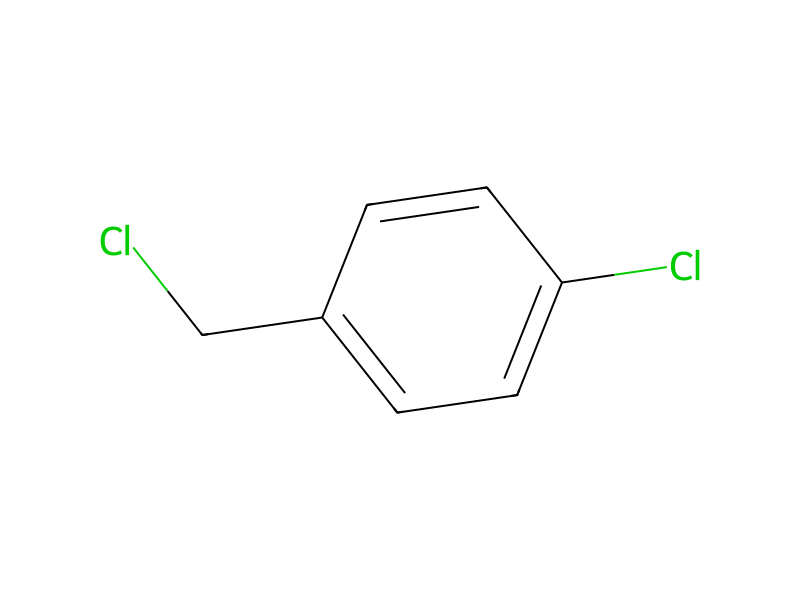
1-Chloro-4-(chloromethyl)benzene → 2-Carbamoyl-1-(4-chlorobenzyl)pyrrolidine
Reaction equation

Cl.[NH:2]1[CH2:9][CH2:8][CH2:7][CH:3]1[C:4]([NH2:6])=[O:5].CCN(CC)CC.[Cl:17][C:18]1[CH:25]=[CH:24][C:21]([CH2:22]Cl)=[CH:20][CH:19]=1>CC#N.C(Cl)Cl>[C:4]([CH:3]1[CH2:7][CH2:8][CH2:9][N:2]1[CH2:22][C:21]1[CH:24]=[CH:25][C:18]([Cl:17])=[CH:19][CH:20]=1)(=[O:5])[NH2:6]Participants
6





Conditions
- Temperature
- 70 °C
Procedure
A solution of dl-prolinamide hydrochloride (2.5 g, 21.8 mmol) in CH3CN (35 mL) was treated with Et3N (7.45 mL) and 4-chlorobenzyl chloride (3.88 g, 24.1 mmol). The reaction mixture was stirred at 70° C. for 4 h and then at 25° C. for 16 h. The resulting mixture was diluted with CH2Cl2 (20 mL) and was washed with water (3×30 mL). The organic phase was dried (MgSO4) and concentrated. Chromatography (SiO2, 1% CH3OH—CH2Cl2) afforded 2-carbamoyl-1-(4-chlorobenzyl)pyrrolidine (5.21 g, 81%).
Workup
- waitat 25° C. for 16 h
- washwas washed with water (3×30 mL)
- dry with materialThe organic phase was dried (MgSO4)
- concentrationconcentrated
Sources & evidence
- ORD record
- ord-c640918411264a3eaa26619a00a32c88
- Source dataset
- uspto-grants-2002_09
- Patent number
- US06451842B1
Reaction notes
Loading…