Dichloromethane → HCID 54365473, compound
Reaction equation

C([O-])([O-])=O.[K+].[K+].[CH2:7]([O:9][C:10](=[O:23])[C:11]1[CH:16]=[C:15](I)[C:14]([O:18][CH2:19][CH2:20][OH:21])=[C:13]([Br:22])[CH:12]=1)[CH3:8].[CH3:24][O:25][C:26]1[CH:27]=[C:28](B(O)O)[CH:29]=[CH:30][CH:31]=1.C(Cl)Cl.B(O)O>O.O1CCOCC1>[CH2:7]([O:9][C:10](=[O:23])[C:11]1[CH:16]=[C:15]([C:30]2[CH:29]=[CH:28][CH:27]=[C:26]([O:25][CH3:24])[CH:31]=2)[C:14]([O:18][CH2:19][CH2:20][OH:21])=[C:13]([Br:22])[CH:12]=1)[CH3:8]Participants
Reactant 5


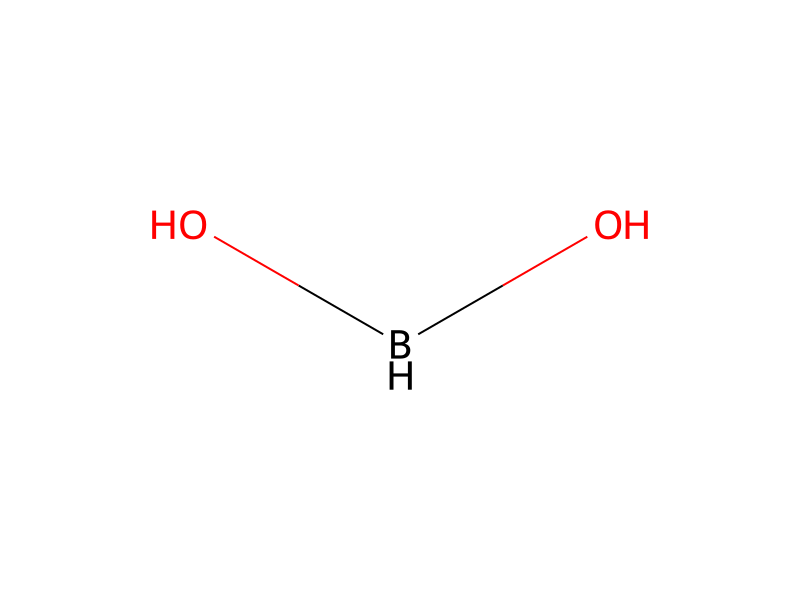


Product 1

Reagents, catalysts & solvents 2


Procedure
To a solution of K2CO3 (4.99 g, 36.1 mmol) in 18 mL H2O was added 3-bromo-4-(2-hydroxyethoxy)-5-iodobenzoic acid ethyl ester (5.0 g, 12.04 mmol), 145 mL dioxane, and 3-methoxyphenylboronic acid (1.83 g, 12.04 mmol) at room temperature. This mixture was stirred for 5 min then it was degassed. Then [1,1í-bis(diphenylphosphino)ferrocene]dichloropalladium(II), complex with CH2Cl2 (49 mg, 0.06 mmol) was added. The reaction was stirred for three hours then 98 mg, 0.12 mmol of the catalyst was added and the reaction was allowed to stir for 3d after which point 182 mg, 1.2 mmol of the boronic acid was added. The reaction was stirred for an additional 7d before being worked up as in Step 1 of Example 135. There yielded 475 mg, 10% of the monoarylated product; 1H NMR (CDCl3) δ 1.38 (t, J=8.18 Hz, 3H); 1.83 (bs, 1H); 3.41 (t, J=5.43 Hz, 2H); 3.75 (t, J=5.43 Hz, 2H); 4.84 (s, 3H); 4.37 (q, J=8.18 Hz, 2H); 6.94 (dd, J=8.18 Hz, 2.72 Hz, 1H); 7.06-7.14 (m, 2H); 7.35 (t, J=8.18 Hz, 1H); 7.99 (d, J=2.73 Hz, 1H); 8.22 (d, J=2.73 Hz, 1H); 1.3 g, 25% of the bisarylated product and 2.1 g, 42% of recovered SM after the crude material was subjected to prep HPLC.
Workup
- customit was degassed
- stirringThe reaction was stirred for three hours
- additionwas added
Sources & evidence
- ORD record
- ord-7ca71919f58340a0af6367bc5b238f07
- Source dataset
- uspto-grants-2002_09
- Patent number
- US06451827B2
Reaction notes
Loading…