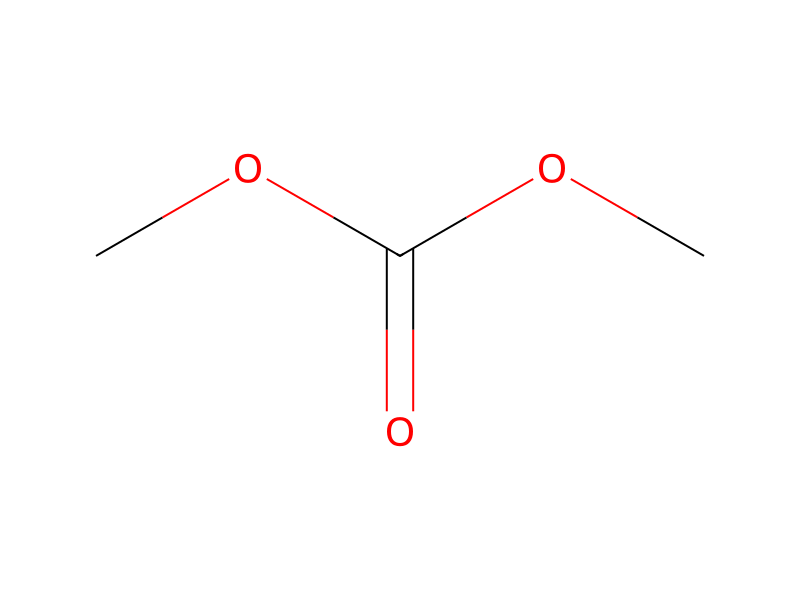
Dimethyl Carbonate → 1H-Indene-2-carboxylic acid, 5-chloro-2,3-dihydro-1-oxo-, methyl ester
Reaction equation

[Cl:1][C:2]1[CH:3]=[C:4]2[C:8](=[CH:9][CH:10]=1)[C:7](=[O:11])[CH2:6][CH2:5]2.[C:12](=O)([O:15]C)[O:13][CH3:14]>[H-].[Na+].C1C=CC=CC=1>[Cl:1][C:2]1[CH:3]=[C:4]2[C:8](=[CH:9][CH:10]=1)[C:7](=[O:11])[CH:6]([C:12]([O:13][CH3:14])=[O:15])[CH2:5]2Participants
Reactant 2

Product 1

Reagents, catalysts & solvents 2


Procedure
It is furthermore known from J. Pharm. Sci. 67(1) 1978, 81, to prepare the chloro-substituted indanonecarboxylic acid ester 5-chloro-2-methoxycarbonyl-1-indanone starting from 3-chlorobenzaldehyde. Here, 3-chlorobenzaldehyde is initially reacted in pyridine with malonic acid to give 3-chlorocinnamic acid. Following hydrogenation of the ethylenic double bond and cyclization to the 5-chloro-1-indanone, the latter is then reacted with dimethyl carbonate in the presence of sodium hydride and benzene as solvent to give 5-chloro-2-methoxycarbonyl-1-indanone. This synthesis method has the disadvantage of the multistep mechanism which considerably increases the likelihood of the formation of various by-products, which is reflected in only a low yield of 48%. Additionally, the total reaction requires the repeated use of substances such as sodium hydride and benzene, which are expensive, problematic with respect to safety or hazardous to health.
Sources & evidence
- ORD record
- ord-505b1907c99f47eca769904e7043aa0e
- Source dataset
- uspto-grants-2002_09
- Patent number
- US06455725B1
Reaction notes
Loading…