Formaldehyde → HCID 13706886, compound
Reaction equation

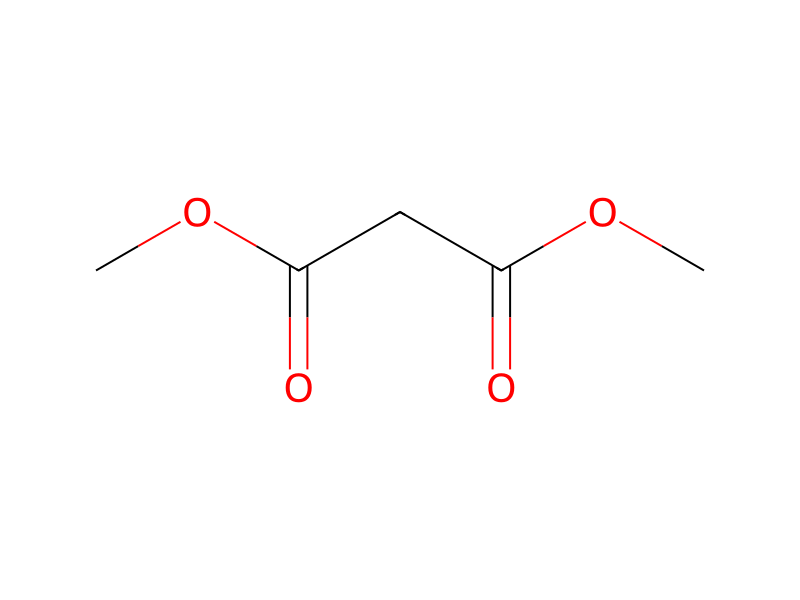
C(OC)(=O)CC(OC)=O.C[O-].[Na+].C(Br)CCCCCCCCCCCCCCCCC.CCOCC.[CH3:37][O:38][C:39](=[O:63])[CH:40]([CH2:45][CH2:46][CH2:47][CH2:48][CH2:49][CH2:50][CH2:51][CH2:52][CH2:53][CH2:54][CH2:55][CH2:56][CH2:57][CH2:58][CH2:59][CH2:60][CH2:61][CH3:62])[C:41](OC)=O.[OH-].[K+].C(C(C(O)=O)C(OC)=O)CCCCCCCCCCCCCCCCC.C(NCC)C.C=O.C([O-])(=O)C=C>CO.O>[CH2:45]([C:40](=[CH2:41])[C:39]([O:38][CH3:37])=[O:63])[CH2:46][CH2:47][CH2:48][CH2:49][CH2:50][CH2:51][CH2:52][CH2:53][CH2:54][CH2:55][CH2:56][CH2:57][CH2:58][CH2:59][CH2:60][CH2:61][CH3:62]Participants
Reactant 10









Product 1

Reagents, catalysts & solvents 2


Procedure
After addition of dimethyl malonate (0.50 mole) to a solution of sodium methylate (0.50 mole in 400 ml methanol), octadecyl bromide (0.45 mole) is added dropwise. The reaction mixture was heated gently during the addition and the mixture was refluxed for 10 hours after addition of the halide. At the end of this time, the methanol was distilled off. The residue was cooled and stirred with 500 ml of water. The product, a pasty solid, floated on top of the water, and ether (350 mole) was added to dissolve it. The ether layer was evaporated, and the product was recrystallized from 900 ml of methanol. After recrystallization from methanol and drying in a vacuum oven, a 69.2 percent yield was obtained, m.p. 45°-47° C. The dimethyl-n-octadecylmalonate (0.17 mole), dissolved in 200 ml of methanol, was added to a solution of 11.3g potassium hydroxide (86.1 percent) in 45 ml of methanol. The mixture was stirred for 1.5 days and the potassium salt which separated was filtered. The salt was dissolved in 500 ml of water with stirring. After acidifying with 6N HCl, the solution was stirred for 3 hours to flocculate the precipitate. The product was filtered, washed and dried in a vacuum oven. A 95 percent yield was obtained, m.p. 68°-70° C. Methyl hydrogen octadecylmalonate (0.16 mole), diethyl amine (0.16 mole), and 13g of a 37 percent formaldehyde solution were stirred with heating to initiate the reaction, after which stirring was continued without heating for 6 hours. After standing overnight, impure solid acrylate had settled out. The pasty product layer was washed with hydrochloric acid followed by water until neutral (sodium sulfate was used to break emulsions formed during the washing). The ether layer was dried over anhydrous potassium carbonate. The solution was filtered and evaporated. The compound was crystallized from benzene. A 40 percent yield was obtained, m.p. 48°-50°C.
Workup
- additionis added dropwise
- temperatureThe reaction mixture was heated gently during the addition
- temperaturethe mixture was refluxed for 10 hours
- distillationAt the end of this time, the methanol was distilled off
- temperatureThe residue was cooled
- additionwas added
- dissolutionto dissolve it
- customThe ether layer was evaporated
- customthe product was recrystallized from 900 ml of methanol
- customAfter recrystallization from methanol
- customdrying in a vacuum oven
- customa 69.2 percent yield was obtained
- stirringThe mixture was stirred for 1.5 days
- customthe potassium salt which separated
- filtrationwas filtered
- dissolutionThe salt was dissolved in 500 ml of water
- stirringwith stirring
- stirringthe solution was stirred for 3 hours
- filtrationThe product was filtered
- washwashed
- customdried in a vacuum oven
- customA 95 percent yield was obtained
- temperaturewith heating
- customthe reaction
- stirringafter which stirring
- temperaturewithout heating for 6 hours
- washThe pasty product layer was washed with hydrochloric acid
- customformed during the washing)
- dry with materialThe ether layer was dried over anhydrous potassium carbonate
- filtrationThe solution was filtered
- customevaporated
- customThe compound was crystallized from benzene
- customA 40 percent yield was obtained
Sources & evidence
- ORD record
- ord-21049af0592343df8b4609711244f32b
- Source dataset
- uspto-grants-1976_08
- Patent number
- US03972864
Reaction notes
Loading…