Diethyl Carbonate → 1-[2-(Tetrahydro-2-oxo-1,3-oxazin-3-yl)ethyl]-3-phenylurea
Reaction equation

ClCC[CH2:4][OH:5].NCCNC(NC1C=CC=CC=1)=O.[OH:19][CH2:20][CH2:21][CH2:22][NH:23][CH2:24][CH2:25][NH:26][C:27]([NH:29][C:30]1[CH:35]=[CH:34][CH:33]=[CH:32][CH:31]=1)=[O:28].C(=O)(OCC)OCC>>[O:5]=[C:4]1[N:23]([CH2:24][CH2:25][NH:26][C:27]([NH:29][C:30]2[CH:31]=[CH:32][CH:33]=[CH:34][CH:35]=2)=[O:28])[CH2:22][CH2:21][CH2:20][O:19]1Participants
5
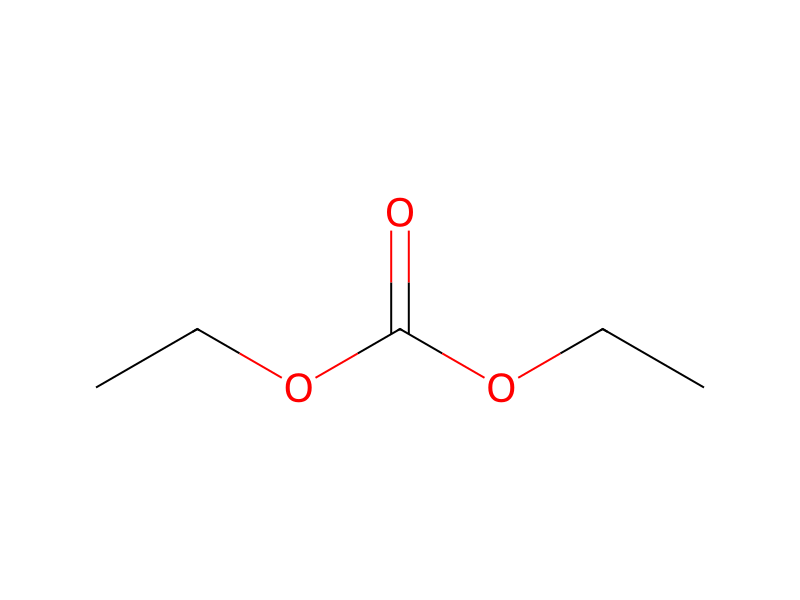


Procedure
When 3-chloropropanol is reacted with 1-(2-aminoethyl)-3-phenylurea and the resulting 1-[2-(3-hydroxypropylamino)ethyl]-3-phenylurea is reacted with diethyl carbonate according to the general processes of steps 1 and 2 of Example 2, there is obtained 1-[2-(tetrahydro-2-oxo-1,3-oxazin-3-yl)ethyl]-3-phenylurea.
Sources & evidence
- ORD record
- ord-870bed2442b84770973e9e0e0383bb67
- Source dataset
- uspto-grants-1976_08
- Patent number
- US03973946
Reaction notes
Loading…