Phosphoric Acid → Ammonia
Reaction equation

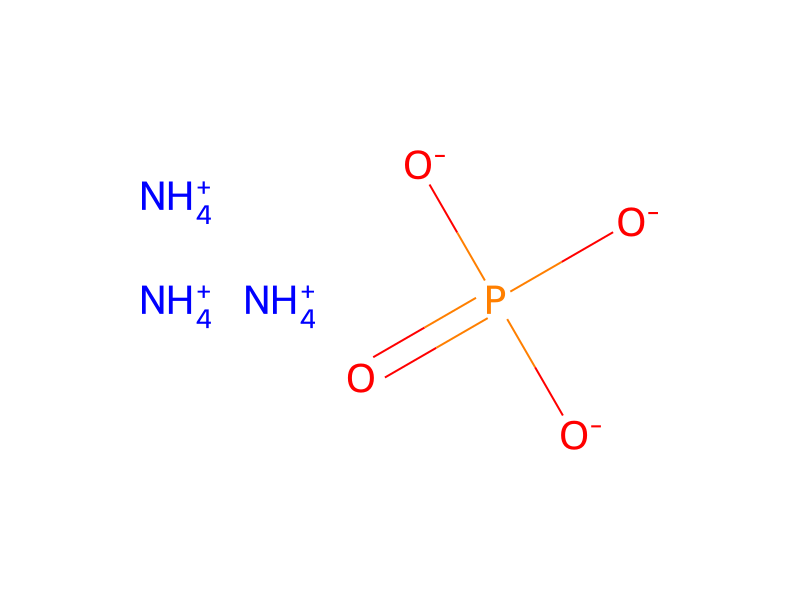
[NH2:1]C(N)=O.[P:5](=[O:9])([OH:8])([OH:7])[OH:6]>>[P:5]([O-:9])([O-:8])([O-:7])=[O:6].[NH4+:1].[NH4+:1].[NH4+:1].[NH3:1]Participants



Procedure
A process for producing particulate ammonium phosphate which comprises reacting the off-gases from a urea production process with phosphoric acid containing at least 35% P3O5 in a stirred reactor at a pressure of from -0.1 to +1.5 kg/cm2 gauge to give a boiling fluid ammonium phosphate having an NH3 :H3PO4 molar ratio of from 0.1:1 to 0.8:1; passing the fluid ammonium phosphate to a pressure reactor operated at from 0.5 to 3.5 kg/cm2 gauge and at 130° to 180°C where it is reacted with gaseous ammonia to give a boiling fluid ammonium phosphate having an NH3 :H3PO4 molar ratio of from 0.95:1 to 1.85:1 and containing from 4 to 20% of water; and expelling the fluid ammonium phosphate into a solidification zone at ambient pressure in which solid particles are formed.
Sources & evidence
- ORD record
- ord-2fc5554d66a349a6b0f0484a82d200f6
- Source dataset
- uspto-grants-1976_08
- Patent number
- US03974262
Reaction notes
Loading…