Acetone → HCID 21510503, compound
Reaction equation

[CH:1](=[O:9])[C:2]1[C:3](=[CH:5][CH:6]=[CH:7][CH:8]=1)[OH:4].CC(C)=O.[OH-].[K+].Br[CH2:17][C:18]([C:20]1[CH:25]=[CH:24][C:23]([Cl:26])=[CH:22][CH:21]=1)=[O:19]>O>[Cl:26][C:23]1[CH:24]=[CH:25][C:20]([C:18]([CH:17]2[CH:1]([OH:9])[C:2]3[C:3](=[CH:5][CH:6]=[CH:7][CH:8]=3)[O:4]2)=[O:19])=[CH:21][CH:22]=1Participants
6
Reactant 4

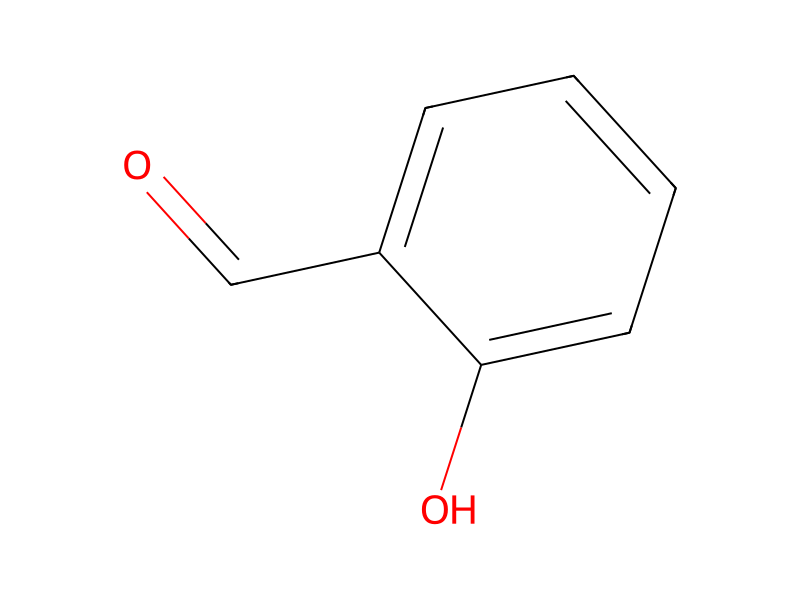


Product 1

Reagents, catalysts & solvents 1

Procedure
To a solution of 15.3 g. (0.125 mol.) of salicylaldehyde in 100 ml. of acetone was added 7.0 g. (0.125 mol.) of potassium hydroxide dissolved in a minimum amount of water. α-Bromo-p-chloroacetophenone (29.16 g., 0.125 mol.) was added dropwise with stirring and cooling (ice bath). After addition, the reaction mixture was stirred at 25° for 12 hours. The precipitate was collected by filtration, washed with water and combined with the residue remaining after concentration of the filtrate to give 2-(4'-chlorobenzoyl)-3-hydroxycoumaran which was immediately dehydrated in the presence of p-toluenesulfonic acid to yield 2-(4'-chlorobenzoyl)benzofuran.
Workup
- temperaturecooling (ice bath)
- additionAfter addition
- stirringthe reaction mixture was stirred at 25° for 12 hours
- filtrationThe precipitate was collected by filtration
- washwashed with water
Sources & evidence
- ORD record
- ord-0bf8ae4dc77b49cda667974a44fd62a8
- Source dataset
- uspto-grants-1976_08
- Patent number
- US03975537
Reaction notes
Loading…