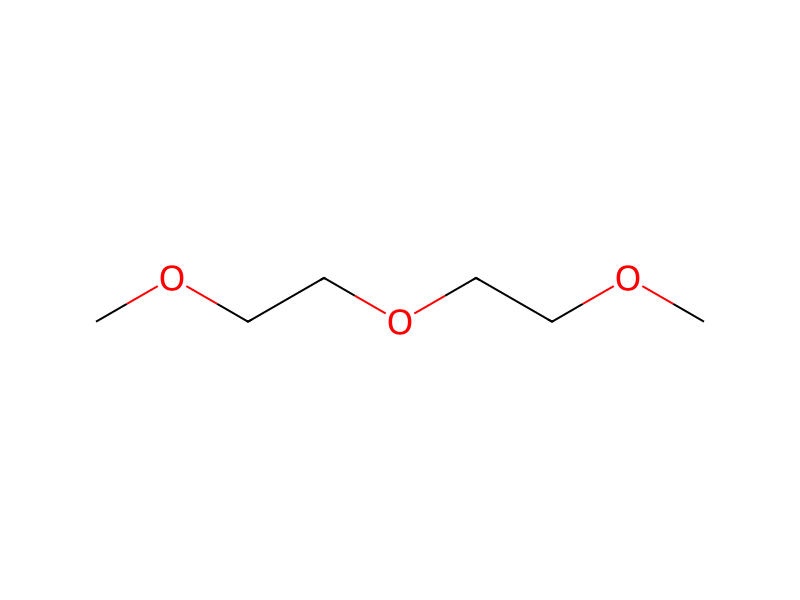
Diglyme → HCID 21518632, compound
Reaction equation

[BH4-].[Na+].Cl[CH:4]([C:14]1[O:15][C:16]2[CH:22]=[CH:21][CH:20]=[CH:19][C:17]=2[CH:18]=1)[C:5]1[CH:10]=[CH:9][C:8]([N+:11]([O-:13])=[O:12])=[CH:7][CH:6]=1.COCCOCCOC.[OH-].[Na+]>CCCCCC>[N+:11]([C:8]1[CH:7]=[CH:6][C:5]([CH2:4][C:14]2[O:15][C:16]3[CH:22]=[CH:21][CH:20]=[CH:19][C:17]=3[CH:18]=2)=[CH:10][CH:9]=1)([O-:13])=[O:12]Participants
6
Reactant 4



Product 1

Reagents, catalysts & solvents 1

Procedure
A mixture of 13.6 g. (0.36 mol.) of sodium borohydride and 14.4 g. (0.05 mol.) of 2-(α-chloro-4'-nitrobenzyl)benzofuran in 200 ml. of 80% aqueous diglyme is stirred at 50° for four hours. The reaction mixture is then cooled and hexane followed by 4.0 g. (0.1 mol.) of sodium hydroxide are added. The layers are separated and the organic phase is dried (MgSO4) and concentrated to give 2-(4'-nitrobenzyl)benzofuran.
Workup
- additionA mixture of 13.6 g
- temperatureThe reaction mixture is then cooled
- customThe layers are separated
- dry with materialthe organic phase is dried (MgSO4)
- concentrationconcentrated
Sources & evidence
- ORD record
- ord-acbfa2d485984dae98522f9a1299f7bc
- Source dataset
- uspto-grants-1976_08
- Patent number
- US03975537
Reaction notes
Loading…