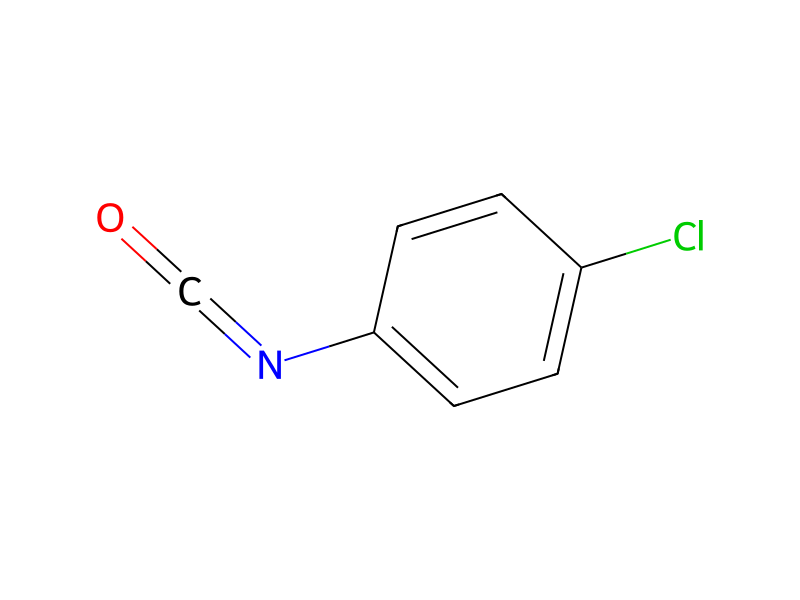
4-Chlorophenyl Isocyanate → HCID 68143242, compound
Reaction equation

[C:1]1(=[O:8])[CH2:6][CH2:5][CH2:4][C:3](=[O:7])[CH2:2]1.[Cl:9][C:10]1[CH:15]=[CH:14][C:13]([N:16]=[C:17]=[O:18])=[CH:12][CH:11]=1.C(N(CC)CC)C.[N-]=C=O>CC(C)=O>[Cl:9][C:10]1[CH:15]=[CH:14][C:13]([NH:16][C:17]([C:2]2[C:3](=[O:7])[CH2:4][CH2:5][CH2:6][C:1]=2[OH:8])=[O:18])=[CH:12][CH:11]=1Participants
Reactant 4


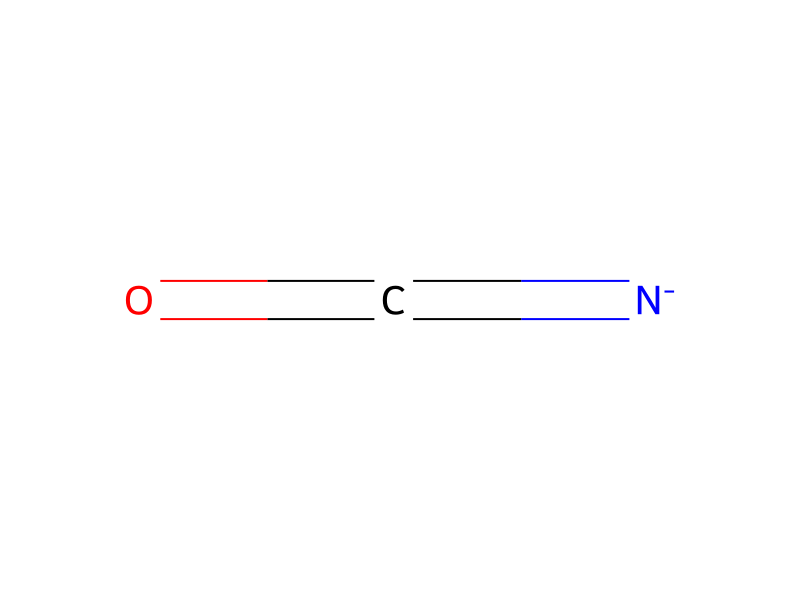
Product 1

Reagents, catalysts & solvents 1

Procedure
A solution containing 8.5 parts of cyclohexane-1,3-dione, 11.5 parts of p-chlorophenylisocyanate and 7.6 parts of triethylamine in 200 parts of acetone is stirred and refluxed for two hours. The infrared spectrum then shows no isocyanate (band at 2270 cm-1). The solution is concentrated under reduced pressure to about 50 parts, with separation of a few crystals, and poured with stirring into 500 parts of 2-normal hydrochloric acid. The precipitated solid is collected by filtration and dried. The resulting solid is mixed with chloroform, 250 parts by volume, and filtered from 6.5 parts of insoluble by-product. Removal of chloroform from the filtrate leaves a light pink solid which is crystallized from alcohol to give 6.7 parts of nearly white solid, melting point 113°C.-114°C.
Workup
- temperaturerefluxed for two hours
- concentrationThe solution is concentrated under reduced pressure to about 50 parts, with separation of a few crystals
- additionpoured
- stirringwith stirring into 500 parts of 2-normal hydrochloric acid
- filtrationThe precipitated solid is collected by filtration
- customdried
- additionThe resulting solid is mixed with chloroform, 250 parts by volume
- filtrationfiltered from 6.5 parts of insoluble by-product
- customRemoval of chloroform from the filtrate
- customleaves a light pink solid which
- customis crystallized from alcohol
- customto give 6.7 parts of nearly white solid, melting point 113°C.-114°C.
Sources & evidence
- ORD record
- ord-97e3cb9baea445188a8628c2c60f7beb
- Source dataset
- uspto-grants-1976_08
- Patent number
- US03976785
Reaction notes
Loading…