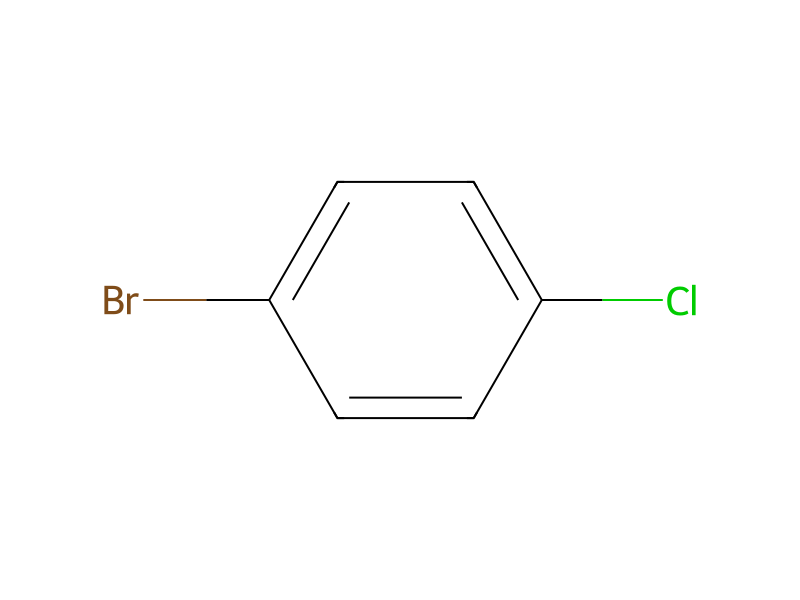
p-Bromochlorobenzene → 4-Chlorostyrene
Reaction equation

[Cl:1][C:2]1[CH:7]=[CH:6][C:5](Br)=[CH:4][CH:3]=1.[C:9]([O-])(=O)[CH3:10].[Na+]>[Pd].CN(C=O)C>[Cl:1][C:2]1[CH:7]=[CH:6][C:5]([CH:9]=[CH2:10])=[CH:4][CH:3]=1Participants
5
Reactant 2

Product 1

Reagents, catalysts & solvents 2


Conditions
- Temperature
- 130 °C
Procedure
2 ml of the stock solution described in Example 23 are added to 18 ml of DMF. 9.77 g (50 mmols) of 4-chlorobromobenzene and 4.52 g (55 mmols) of anhydrous sodium acetate are then added. The reaction mixture is then placed under ethylene in a pressure apparatus and is stirred for 6 hours at 10 bar and 130° C. 3.62 g (26.1 mmols) of 4-chlorostyrene are obtained, corresponding to a yield of 52% of theory (conversion figure 5200; Pd content 0.01 mol %).
Sources & evidence
- ORD record
- ord-97387ec6a7b9418eb3316fe71451b632
- Source dataset
- uspto-grants-1986_01
- Patent number
- US04564479
Reaction notes
Loading…