Hexafluoropropylene → Carbon Dioxide
Reaction equation

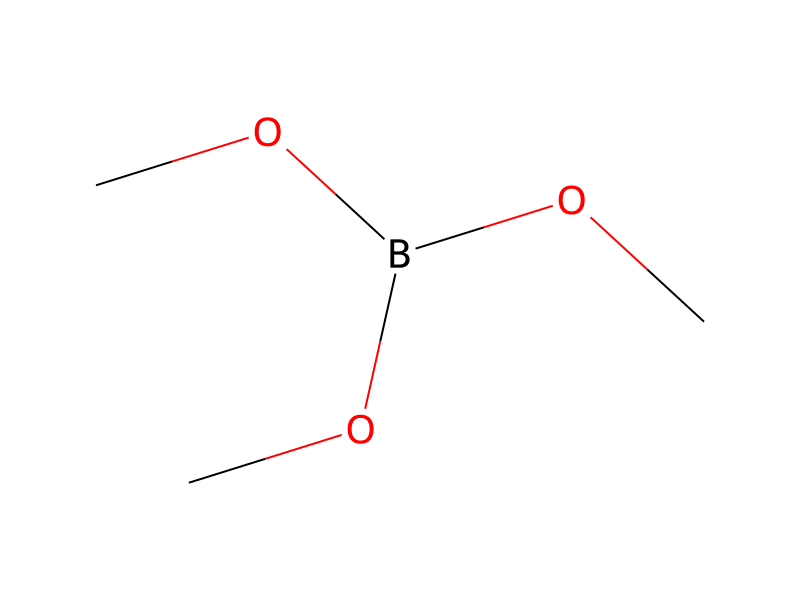
[S:1]([F:13])([O:4][C:5](F)(F)C(F)=C(F)F)(=[O:3])=[O:2].[F:14][C:15]([F:22])([F:21])[C:16]([F:20])=C(F)F.[B].B(OC)(OC)[O:25]C>>[C:15]([CH:16]([S:1]([F:13])(=[O:3])=[O:2])[F:20])([F:22])([F:21])[F:14].[C:5](=[O:4])=[O:25]Participants
6





Procedure
The starting material, perfluoroallyl fluorosulfate (FAF), CF2 =CFCF2OSO2F, may be prepared as described in U.S. Pat. No. 4,206,138 to D. C. England. England prepared FAF by reacting hexafluoropropylene with SO3 under anhydrous conditions in the presence of a small amount of a trivalent boron compound such as trimethyl borate at 0°-100° C. A possible byproduct is hexafluoropropylene sultone, ##STR2## which is difficult to separate from FAF by distillation. The sultone in the FAF mixture can be hydrolyzed with ice water to give CF3CFHSO2F+HF+CO2 (gas). This product, CF3CFHSO2F, is also difficult to separate from FAF by distillation, but it does not react with Br2 and can be separated from the Br2 adduct of FAF by distillation.
Workup
- customEngland prepared FAF
- customat 0°-100° C
- customto separate from FAF by distillation
Sources & evidence
- ORD record
- ord-b81dc8cf8c2a4abe81b6f5b411605a43
- Source dataset
- uspto-grants-1986_01
- Patent number
- US04567003
Reaction notes
Loading…