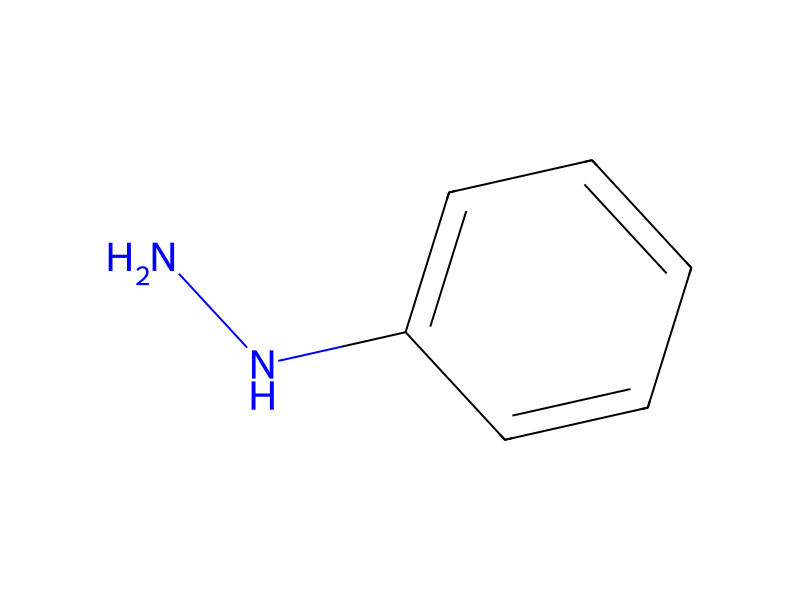
Phenylhydrazine → HCID 70451592, compound
Reaction equation

[CH2:1]([N:4]([C:8]1[CH:15]=[CH:14][CH:13]=[CH:12][C:9]=1[CH:10]=O)[CH2:5][CH:6]=[CH2:7])[CH:2]=[CH2:3].[C:16]1([NH:22][NH2:23])[CH:21]=[CH:20][CH:19]=[CH:18][CH:17]=1>CO>[C:16]1([NH:22][N:23]=[CH:10][C:9]2[CH:12]=[CH:13][CH:14]=[CH:15][C:8]=2[N:4]([CH2:5][CH:6]=[CH2:7])[CH2:1][CH:2]=[CH2:3])[CH:21]=[CH:20][CH:19]=[CH:18][CH:17]=1Participants
Reactant 2

Product 1

Reagents, catalysts & solvents 1

Procedure
To 1 mole of N,N-diallylaminobenzaldehyde in methanol, was added 1.2 moles of phenylhydrazine. The mixture was heated under reflux for about 2 hours to yield diallylaminobenzaldehyde N-phenylhydrazone (melting point: 63.5°-65.0° C.). Into a mixture of 5 cc of 5N sodium hydroxide solution and 20 cc of dimethyl sulfoxide, were added 5.0 g of said hydrazone and 4.8 g of allyl bromide. The mixture was stirred for 2 hours at room temperature. After completion of the reaction, 50 cc of water and ethyl acetate were added to the reaction mixture to extract the organic layer. The extract was freed from the ethyl acetate by distillation and the residue was recrystallized from 150 cc of alcohol to yield 3.8 g of pale yellowish white crystals melting at 38.5°-40.0° C.
Workup
- temperatureThe mixture was heated
- temperatureunder reflux for about 2 hours
Sources & evidence
- ORD record
- ord-8b9a8858526e4295b8e3e6d5bf9a7a50
- Source dataset
- uspto-grants-1986_01
- Patent number
- US04567126
Reaction notes
Loading…