4-Chlorophenyl Isocyanate → 1-(4-Chlorophenyl)-3-hexanimidoylurea
Reaction equation

[Na].Cl.[C:3]([NH2:10])(=[NH:9])[CH2:4][CH2:5][CH2:6][CH2:7][CH3:8].[Cl:11][C:12]1[CH:17]=[CH:16][C:15]([N:18]=[C:19]=[O:20])=[CH:14][CH:13]=1>CC(C)=O>[Cl:11][C:12]1[CH:17]=[CH:16][C:15]([NH:18][C:19]([NH:9][C:3](=[NH:10])[CH2:4][CH2:5][CH2:6][CH2:7][CH3:8])=[O:20])=[CH:14][CH:13]=1Participants
5
Reactant 3
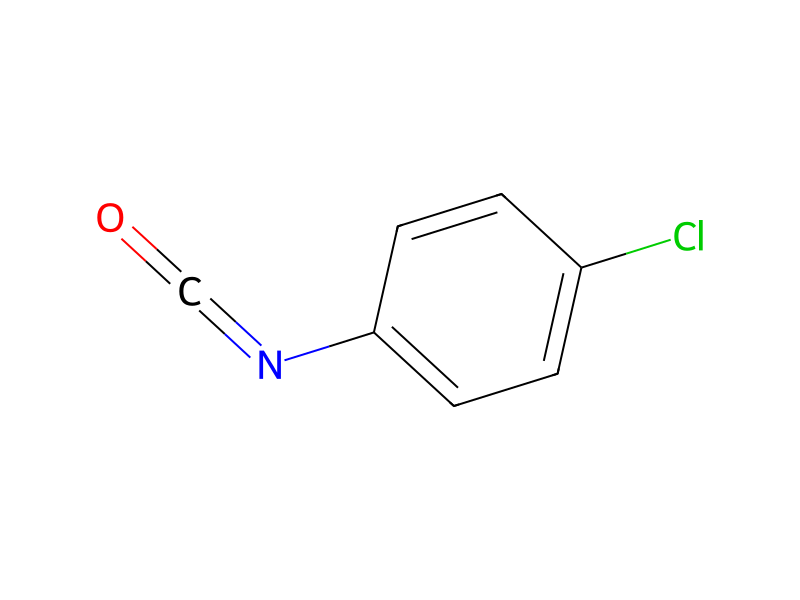


Product 1

Reagents, catalysts & solvents 1

Procedure
Following a procedure similar to that described in Example 1 but using 3.2 g. sodium in 200 ml. dry acetone, 21. g. hexanamidine hydrochloride, and 21.4 g. 4-chlorophenyl isocyanate in 100 ml. dry acetone, there was obtained after recrystallization from acetone 13.9 g. of the hydrochloride of 1-(4-chlorophenyl)-3-(hexanimidoyl)urea; m.p. 175°-179°C.
Workup
- customafter recrystallization from acetone 13.9 g
Sources & evidence
- ORD record
- ord-715cf10c70954463995e6f4761ccb960
- Source dataset
- uspto-grants-1976_10
- Patent number
- US03984467
Reaction notes
Loading…