Sodium Dithionite → 4,5-Diamino-2-benzylpyrimid-6-one
Reaction equation

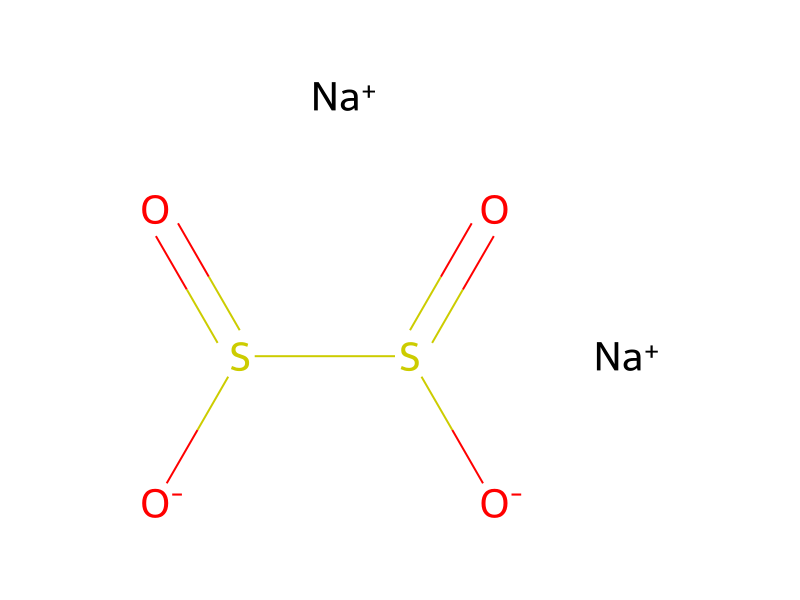
S(S([O-])=O)([O-])=O.[Na+].[Na+].[NH2:9][C:10]1[N:11]=[C:12]([CH2:25][C:26]2[CH:31]=[CH:30][CH:29]=[CH:28][CH:27]=2)[NH:13][C:14](=[O:24])[C:15]=1[N:16]=NC1C=CC=CC=1>C(O)C.[OH-].[Na+]>[NH2:9][C:10]1[N:11]=[C:12]([CH2:25][C:26]2[CH:27]=[CH:28][CH:29]=[CH:30][CH:31]=2)[NH:13][C:14](=[O:24])[C:15]=1[NH2:16]Participants
Reactant 2

Product 1

Reagents, catalysts & solvents 2


Conditions
- Temperature
- 0 °C
Procedure
Sodium dithionite (30 g.) was added in portions to an agitated suspension of 4-amino-2-benzyl-5-phenylazo-pyrimid-6-one (14 g.) in a mixture of ethanol (200 ml.) and 2N aqueous sodium hydroxide solution (200 ml.) maintained at a temperature near to the reflux temperature. The mixture was then heated under reflux for 20 minutes, treated with a further quantity of sodium dithionite (20 g.) and the mixture heated under reflux for a further 30 minutes. The mixture was then evaporated to dryness, the residue was dissolved in water (200 ml.), acidified to pH 6 by means of concentrated hydrochloric acid, cooled to 0° C, and filtered. The solid thus obtained was recrystallised from water to give 4,5-diamino-2-benzyl-pyrimid-6-one (4.4 g.), m.p. 243°-246° C.
Workup
- temperaturemaintained at a temperature near to the reflux temperature
- temperatureThe mixture was then heated
- temperatureunder reflux for 20 minutes
- temperaturethe mixture heated
- temperatureunder reflux for a further 30 minutes
- customThe mixture was then evaporated to dryness
- dissolutionthe residue was dissolved in water (200 ml.)
- filtrationfiltered
- customThe solid thus obtained
- customwas recrystallised from water
Sources & evidence
- ORD record
- ord-330038c4db0d45b7a090e5481c8a0cc6
- Source dataset
- uspto-grants-1976_10
- Patent number
- US03987160
Reaction notes
Loading…