Adenine → L-Aspartic Acid
Reaction equation

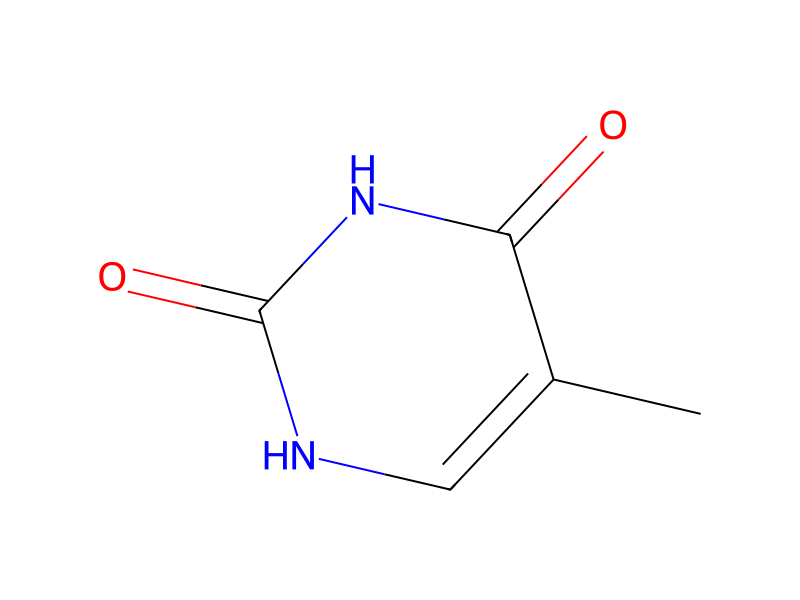
[NH:1]1[CH:9]=[C:7](C)[C:5](=[O:6])[NH:4]C1=O.N1C(N)=C2C(N=CN2)=NC=1.N[C@H](C(O)=O)CC[C:24](=[O:26])[OH:25].[C@@H]1(N2C3N=CN=C(N)C=3N=C2)O[C@H](CO)[C@@H](O)[C@H]1[OH:32]>>[NH2:1][C@H:9]([C:24]([OH:26])=[O:25])[CH2:7][C:5](=[O:6])[OH:32].[NH2:1][C@H:9]([C:24]([OH:26])=[O:25])[CH2:7][C:5](=[O:6])[NH2:4]Participants



Procedure
For diagnosis of a genetic disease where the mutation that causes the disease is known, the invention provides methods which enable detection of the presence of heteroduplexes between patient and reference nucleic acids. The invention utilizes known methods of nucleic acid hybridization to form duplexes of test and references strands, and provides inventive methods for the sensitive detection of even a single base pair mismatch in a heteroduplex. Thus, a genetic disease, one example of which is sickle-cell anemia, which involves the substitution of a thymine for an adenine at position 17 of the gene sequence encoding the beta chain of hemoglobin, is easily diagnosed by the mismatch detection methods of the invention, as described below. Other diseases involving genetic mutations which are diagnosable according to the invention include the following. For example, Tajima et al. (Jour. Biochem. 105:249, 1989) disclose a gGAG→AAG base change which leads to a Glu→Lys amino acid substitution and results in apolipoprotein E (ApoE) deficiency; Hirshhorn et al. (Jour. Clin. Invest. 83:487, 1989) describe a mutation which leads to adenosine deaminase (ADA) deficiency, i.e., a single base change (CCG→CAG) leading to a Pro→Gln amino acid substitution; Jagadees et al. (Jour. Cell. Biol. Suppl. 13E;291, 1989) describe mutations at seven different locations within the FX gene, GAT→AAT resulting in an Asp→Asn substitution at position 58, GTG→ATG resulting in a Val→Met substitution at position 68, GCC→ACC resulting in a Glu→Lys substitution at position 156, TCC→TTC resulting in a Ser→Phe substitution at position 188, GCC→ACC resulting in an Ala→Thr substitution at position 335, and GGG→AGG resulting in a Gly→Arg substitution at position 447, each mutation of which results in a Factor X deficiency; Ginsburg et al. (Proc. Nat. Aca. Sci. 86:3723, 1989) describes two mutations, GTC→GAC and CGG→TGG resulting in Val→Asp and Arg→Trp substitutions at positions 844 and 834, respectively, each of which produces a defective von Willebrand Factor 2a; Matsuura et al. (Jour. Biol. Chem. 264:10148, 1989) describe a mutation which leads to adenylate kinase deficiency (CGG→TGG) leading to an Arg→Trp amino acid substitution; Dilella et al. (Nature 327:333, 1987) describes a mutation within the PAH gene, tCGG→TGG resulting in an Arg→Trp substitution at position 408, which produces the condition known as phenylketonuria; Bock et al. (Biochem. 27:6171, 1988) disclose a CCT→CTT single base change which leads to a Pro→Leu amino acid substitution and results in antithrombin III deficiency; Ohno et al. (Jour. Neurochem. 50:316, 1988) reports on a CGC→CAC mutation resulting in an Arg→His substitution at codon 178 of the HexB gene which produces Tay-Sachs disease; Gibbs et al. (Proc. Nat. Aca. Sci. 86:1919, 1989) discloses mutations at seven different codons of the HPRT gene, TCT→TTA resulting in a Phe→Leu substitution at position 73, TTG→TCG resulting in a Leu→Ser substitution at position 130, GCA→TCA resulting in an Ala→Ser substitution at position 160, CGA→TCA resulting in premature termination of translation at position 169, TTC→GTC resulting in a Phe→Val substitution at position 198, CAT→GAT resulting in a His→Asp substitution at position 203, and TGT→TAT resulting in a Cys→Tyr substitution at position 205, each mutation of which results in HPRT deficiency; and Vulliamy et al. (Proc. Nat. Aca. Sci. 85:5171, 1988) discloses mutations at seven different positions within the G6PDH gene, GAT→AAT resulting in an Asp→Asn substitution at position 58, GTG→ATG resulting in a Val→Met substitution at position 68, AAT→GAT resulting in an Asn→Asp substitution at position 126, GAG→AAG resulting in a Glu→Lys substitution at position 156, TCC→TTC resulting in a Ser→Phe substitution at position 188, GCC→ACC resulting in an Ala→Thr substitution at position 335, and GGG→AGG resulting in a Gly→Arg substitution at position 447, each mutation of which produces a condition known as G6PDH deficiency.
Workup
- customthe invention provides methods which
- customto form duplexes of test and references strands
- customprovides inventive methods for the sensitive detection of even a single base pair mismatch in a heteroduplex
- customresults in apolipoprotein E (ApoE) deficiency
Sources & evidence
- ORD record
- ord-effe853f142d4cb38d07b52f3465da27
- Source dataset
- uspto-grants-1998_05
- Patent number
- US05750335
Reaction notes
Loading…