Iodine → HCID 54068353, compound
Reaction equation

[F:1][C:2]([F:20])([F:19])[C:3]1[CH:4]=[C:5]2[C:10](=[CH:11][CH:12]=1)[N:9]([CH2:13][CH2:14][O:15][CH3:16])[C:8](=[O:17])[C:7](=[O:18])[NH:6]2.S(=O)(=O)(O)O.[I:26](O)(=O)=O.II>C(O)(=O)C.O>[F:20][C:2]([F:1])([F:19])[C:3]1[CH:4]=[C:5]2[C:10](=[CH:11][C:12]=1[I:26])[N:9]([CH2:13][CH2:14][O:15][CH3:16])[C:8](=[O:17])[C:7](=[O:18])[NH:6]2Participants
Reactant 4



Product 1

Reagents, catalysts & solvents 2


Procedure
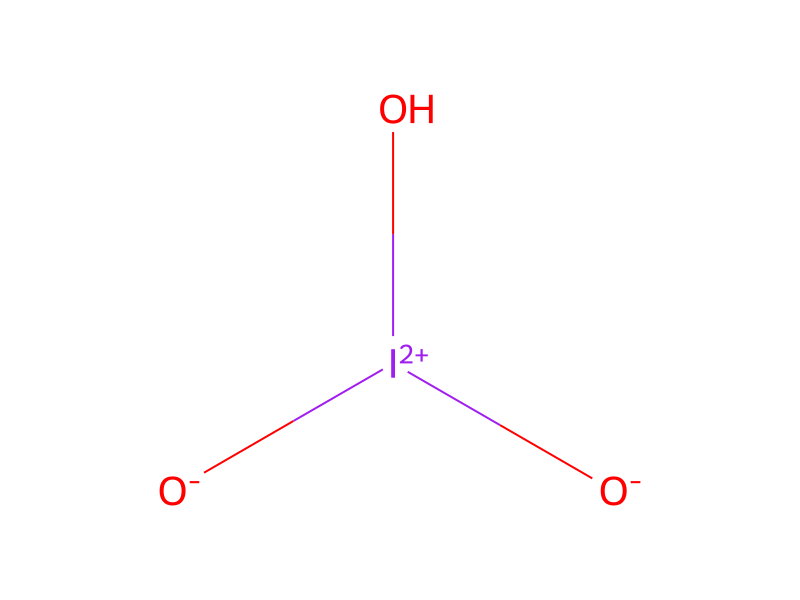
288 mg of 6-trifluoromethyl-1-(1-methoxyeth-2-yl)-1,2,3,4-tetrahydro-2,3-dioxoquinoxaline is mixed in 5 ml of glacial acetic acid with 0.05 ml of water, 0.012 ml of concentrated sulfuric acid, 34.4 mg of iodic acid and 88.4 mg of iodine and heated for 4 hours to 80° C. After concentration by evaporation, it is taken up in water, adjusted alkaline and extracted with methylene chloride. The organic phase is dried, filtered and concentrated by evaporation and the residue is chromatographed on silica gel with toluene:glacial acetic acid:water=10:10:1 as eluant. 40 mg of 6-trifluoromethyl-7-iodo-1-(1-methoxyeth-2-yl)-1,2,3,4-tetrahydro-2,3-dioxoquinoxaline is obtained. The residue is starting material, which can be used again in the reaction.
Workup
- temperatureheated for 4 hours to 80° C
- concentrationAfter concentration
- customby evaporation, it
- extractionextracted with methylene chloride
- customThe organic phase is dried
- filtrationfiltered
- concentrationconcentrated by evaporation
- customthe residue is chromatographed on silica gel with toluene
Sources & evidence
- ORD record
- ord-cd404630da9d4ebb95649d28c43027fc
- Source dataset
- uspto-grants-1998_05
- Patent number
- US05750525
Reaction notes
Loading…