Aniline → N-phenyl-4-oxo-4,5,6,7-tetrahydro-1H-indole-3-carboxamide
Reaction equation

[O:1]=[C:2]1[CH2:10][CH2:9][CH2:8][C:7]2[NH:6][CH:5]=[C:4]([C:11]([OH:13])=O)[C:3]1=2.[NH2:14][C:15]1[CH:20]=[CH:19][CH:18]=[CH:17][CH:16]=1.Cl.CN(C)CCCN=C=NCC>O1CCOCC1>[C:15]1([NH:14][C:11]([C:4]2[C:3]3[C:2](=[O:1])[CH2:10][CH2:9][CH2:8][C:7]=3[NH:6][CH:5]=2)=[O:13])[CH:20]=[CH:19][CH:18]=[CH:17][CH:16]=1Participants
5
Reactant 3


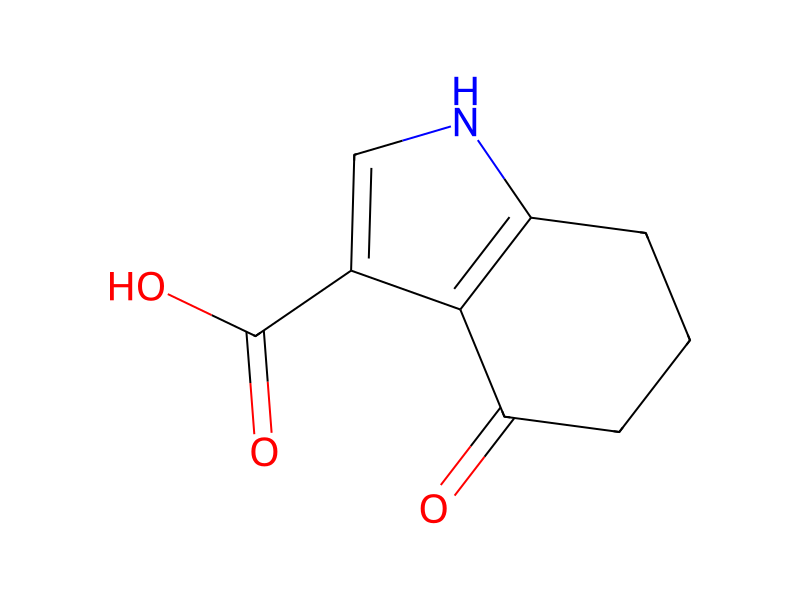
Product 1

Reagents, catalysts & solvents 1

Procedure
A mixture of 4-oxo-4,5,6,7-tetrahydro-1H-indole-3-carboxylic acid (179 mg, 1 mmol), aniline (0.46 mL, 5 mmol), and 1-(3-dimethylaminopropyl)-3-ethylcarbodiimide hydrochloride (959 mg, 5 mmol) in 50% aqueous dioxane (10 mL) was allowed to stir at ambient temperature for 17.5 hours, then concentrated in vacuo. The residue was cooled in an ice water bath, aqueous 3.6N hydrochloric acid was added, and the precipitate collected, rinsed with aqueous 3.6N hydrochloric acid then water and dried. Recrystallization from ethyl alcohol afforded N-phenyl-4-oxo-4,5,6,7-tetrahydro-1H-indole-3-carboxamide (Compound 35) (164 mg). mp 225°-226° C.
Workup
- concentrationconcentrated in vacuo
- temperatureThe residue was cooled in an ice water bath
- additionaqueous 3.6N hydrochloric acid was added
- customthe precipitate collected
- washrinsed with aqueous 3.6N hydrochloric acid
- dry with materialwater and dried
- customRecrystallization from ethyl alcohol
Sources & evidence
- ORD record
- ord-07a2e00bbcc44ea190a62d13ff706bc4
- Source dataset
- uspto-grants-1998_05
- Patent number
- US05750702
Reaction notes
Loading…