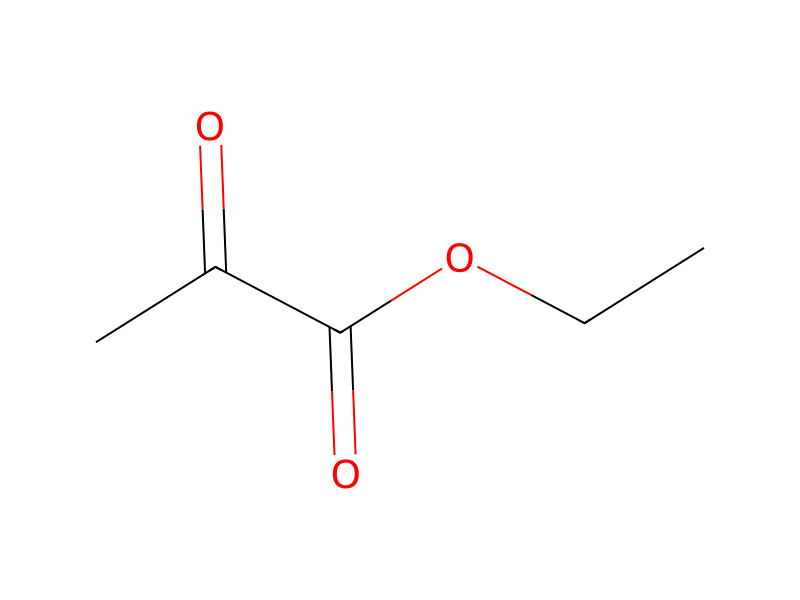
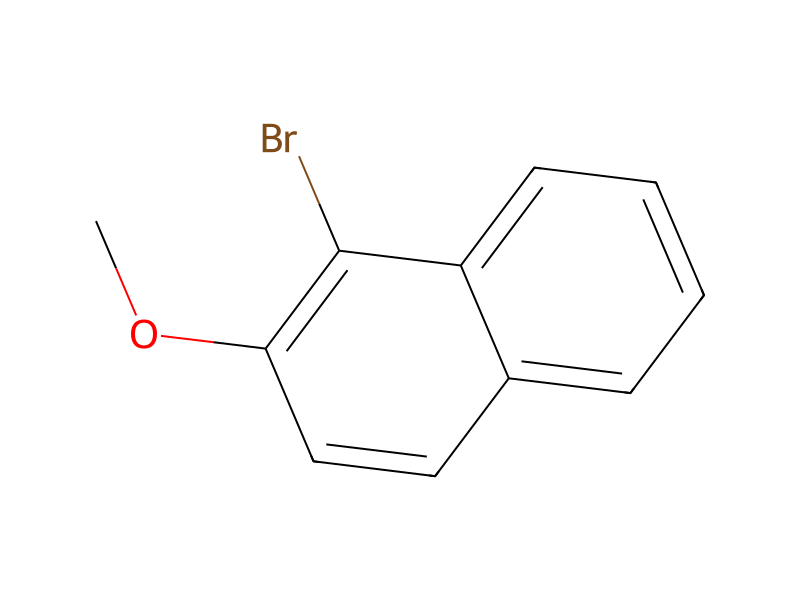
Ethyl pyruvate → Ethyl 2-hydroxy-2-(5-bromo-6-methoxynaphth-2-yl)propionate
Reaction equation

[C:1]([O:6][CH2:7][CH3:8])(=[O:5])[C:2]([CH3:4])=[O:3].[Br:9][C:10]1[C:19]2[C:14](=[CH:15][CH:16]=[CH:17][CH:18]=2)[CH:13]=[CH:12][C:11]=1[O:20][CH3:21].[Cl-].[Al+3].[Cl-].[Cl-]>ClCCl>[OH:3][C:2]([C:16]1[CH:17]=[CH:18][C:19]2[C:14](=[CH:13][CH:12]=[C:11]([O:20][CH3:21])[C:10]=2[Br:9])[CH:15]=1)([CH3:4])[C:1]([O:6][CH2:7][CH3:8])=[O:5]Participants
5



Conditions
- Temperature
- 5 °C
Procedure
Ethyl pyruvate (1,64 g, 14,1 mmol) in dichloromethane (5 mL), was added to a mixture of 1-bromo-2-methoxynaphthalene (2,23 g, 9,41 mmol) and aluminium chloride (1,88 g, 14,1 mmol) in dichloromethane (20 mL) at 5° C. over 30 minutes. The mixture was stirred at 5° C. for a further 1,5 hours and poured on to ice. Ethyl 2-hydroxy-2-(5-bromo-6-methoxynaphth-2-yl)propionate was formed in 11% yield. 1HNMR δ (CDCl3) 1.24 (3H,t), 1.85 (3H,s), 4.00 (3H,s), 4.26 (2H,q), 7.2-8.2 (5H2 m).
Workup
- additionpoured on to ice
Sources & evidence
- ORD record
- ord-0f08432385254adfbd8d0beaaa06fcce
- Source dataset
- uspto-grants-1998_05
- Patent number
- US05750764
Reaction notes
Loading…