Lactic Acid → Carbon Dioxide
Reaction equation

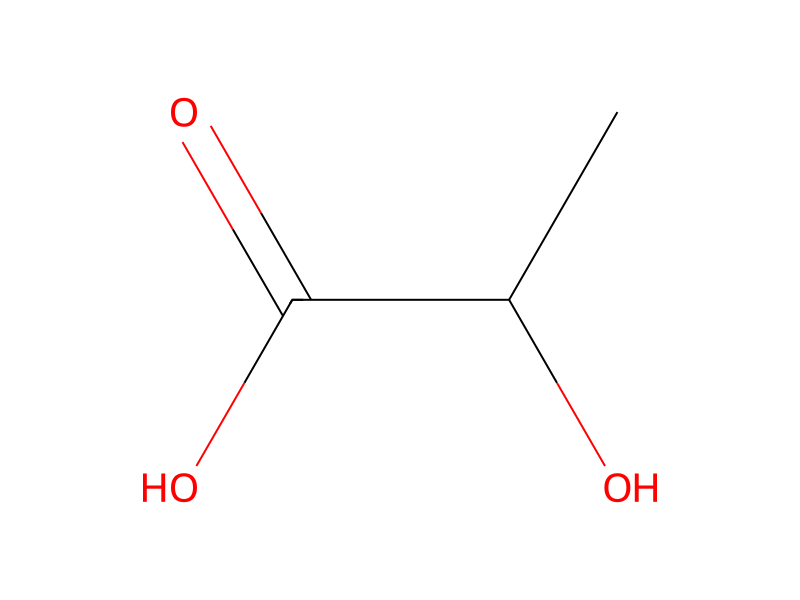
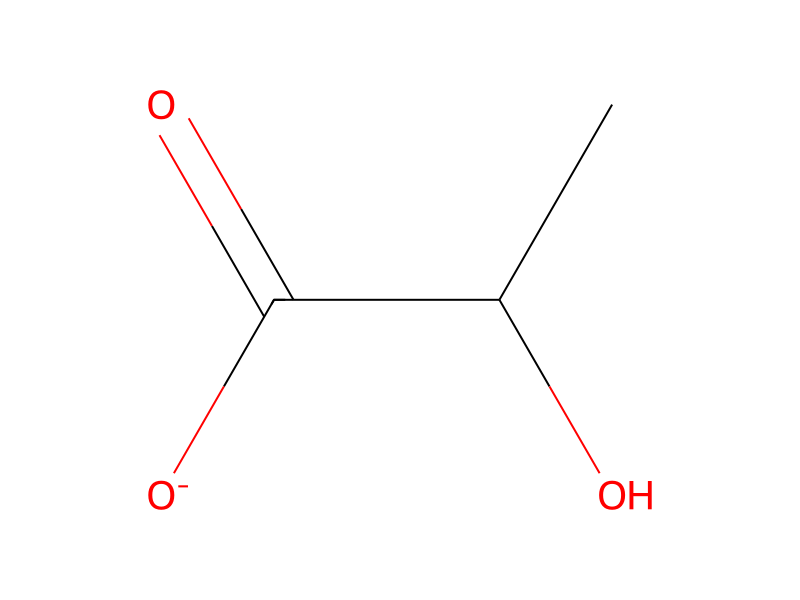
[C:1](=O)([O-:3])[O-:2].[Ca+2].[C:6]([OH:11])(=[O:10])[CH:7]([CH3:9])[OH:8]>>[C:6]([O-:11])(=[O:10])[CH:7]([CH3:9])[OH:8].[C:1](=[O:3])=[O:2]Participants


Procedure
Isobutyl L-chloropropionate is advantageously prepared starting from D-lactic acid which can be prepared, for example, by a biotechnological process disclosed in EP-A 069 291. This entails a mixture of aqueous glucose solution, yeast autolysate, vitamins, catalytic amounts of phosphoric acid and a buffer for the lactic acid produced, e.g. calcium carbonate, being fermented at about 45° C. with the addition of lactic acid bacteria. The pH of the fermentation broth is preferably 4-6. A lactate is produced with evolution of carbon dioxide and is converted into D-lactic acid by adding an acid, preferably concentrated aqueous sulfuric acid. The D-lactic acid is subsequently extracted with isobutanol. The resulting D-lactic acid solution is then concentrated. Part of the lactic acid is esterified even during this. The remaining amount of lactic acid is esterified with acid catalysis, sulfuric acid being an example of a suitable acid (cf., for example, EP-A 287 426, DE-A 32 14 697 and DE-A 34 33 400). The water formed in the reaction is subsequently removed by distillation together with unreacted isobutanol.
Sources & evidence
- ORD record
- ord-3fbb8fdc73aa4aae8971a0c32f5032ee
- Source dataset
- uspto-grants-1998_05
- Patent number
- US05753495
Reaction notes
Loading…