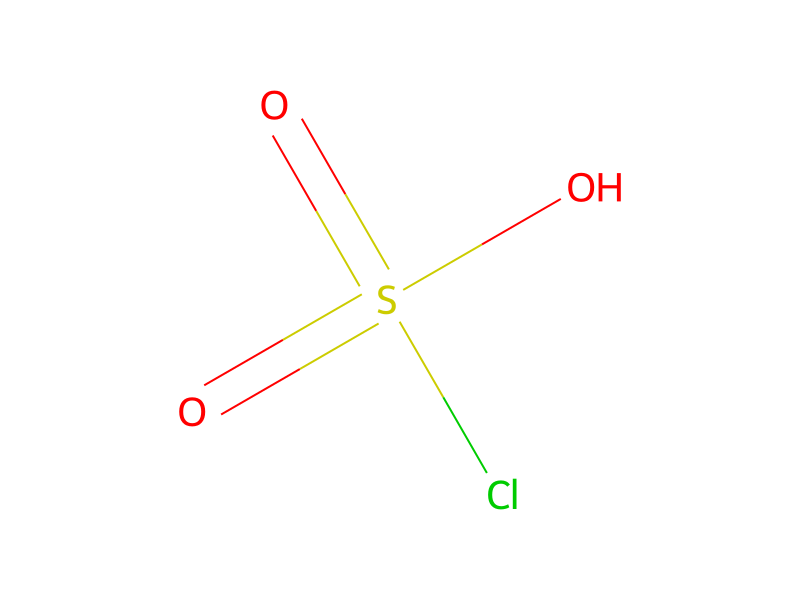
Chlorosulfonic acid → 4-(Pyridin-4-yloxy)benzene-1-sulfonyl chloride hydrochloride
Reaction equation

[O:1]([C:8]1[CH:13]=[CH:12][N:11]=[CH:10][CH:9]=1)[C:2]1[CH:7]=[CH:6][CH:5]=[CH:4][CH:3]=1.[Cl:14][S:15](O)(=[O:17])=[O:16]>ClCCCl>[ClH:14].[N:11]1[CH:12]=[CH:13][C:8]([O:1][C:2]2[CH:3]=[CH:4][C:5]([S:15]([Cl:14])(=[O:17])=[O:16])=[CH:6][CH:7]=2)=[CH:9][CH:10]=1Participants
Reactant 2

Product 1

Reagents, catalysts & solvents 1

Conditions
- Temperature
- 25 °C
Procedure
To a solution of 4-phenoxypyridine (6.84 g) in 20 mL of 1,2-dichloroethane at 0° C. was added 8.0 mL of chlorosulfonic acid in a dropwise manner. After 10 min, the ice bath was removed and the solution was allowed to warm to 25° C. After an additional 1 h, the solution was heated to 40° C. for 3 h, and then cooled to 25° C., and oxalyl chloride (4.4 mL) was added. The solution was heated to 50° C. for 16 h, and then an additional 2.2 mL of oxalyl chloride was added. After 5 h more at 50° C., the solution was cooled to 25° C., and poured with rapid stirring into 250 mL of diethyl ether. After 1 min, the solids were allowed to settle and the supernatant was decanted. The residue was suspended in 3:1 toluene:dichloromethane (250 mL) at about 5° C. and 50 mL of 1.6M aqueous K3PO4 was added with stirring. After about 30 seconds, the mixture was transferred to a separatory funnel and the layers were separated. The organic layer was washed with 25 mL of 1N pH 7 phosphate buffer and with 10 mL of brine, and the combined aqueous layers were extraceted with 50 mL of toluene. The combined organic layers were dried over sodium sulfate then filtered through a glass-fiber filter. To the filtrate was immediately added 11 mL of 4M HCl in dioxane and the solution was then concentrated. Partial concentration from dichloromethane:t-butyl methyl ether and filtration gave 2.11 g of 4-((pyrid-4-yl)oxy)benzenesulfonyl chloride hydrochloride.
Workup
- customthe ice bath was removed
- waitAfter an additional 1 h
- temperaturethe solution was heated to 40° C. for 3 h
- temperaturecooled to 25° C.
- additionoxalyl chloride (4.4 mL) was added
- temperatureThe solution was heated to 50° C. for 16 h
- additionan additional 2.2 mL of oxalyl chloride was added
- waitAfter 5 h more at 50° C.
- temperaturethe solution was cooled to 25° C.
- additionpoured
- waitAfter 1 min
- customthe supernatant was decanted
- additiondichloromethane (250 mL) at about 5° C. and 50 mL of 1.6M aqueous K3PO4 was added
- stirringwith stirring
- waitAfter about 30 seconds
- customthe mixture was transferred to a separatory funnel
- customthe layers were separated
- washThe organic layer was washed with 25 mL of 1N pH 7 phosphate buffer and with 10 mL of brine
- dry with materialThe combined organic layers were dried over sodium sulfate
- filtrationthen filtered through a glass-fiber
- filtrationfilter
- concentrationthe solution was then concentrated
- concentrationPartial concentration from dichloromethane
- filtrationt-butyl methyl ether and filtration
Sources & evidence
- ORD record
- ord-0c43f675a7b446219502873abb8f8bb6
- Source dataset
- uspto-grants-1998_05
- Patent number
- US05753653
Reaction notes
Loading…