Lithium Hydroxide → (4-Benzhydryl-piperazin-1-yl)-acetic acid
Reaction equation

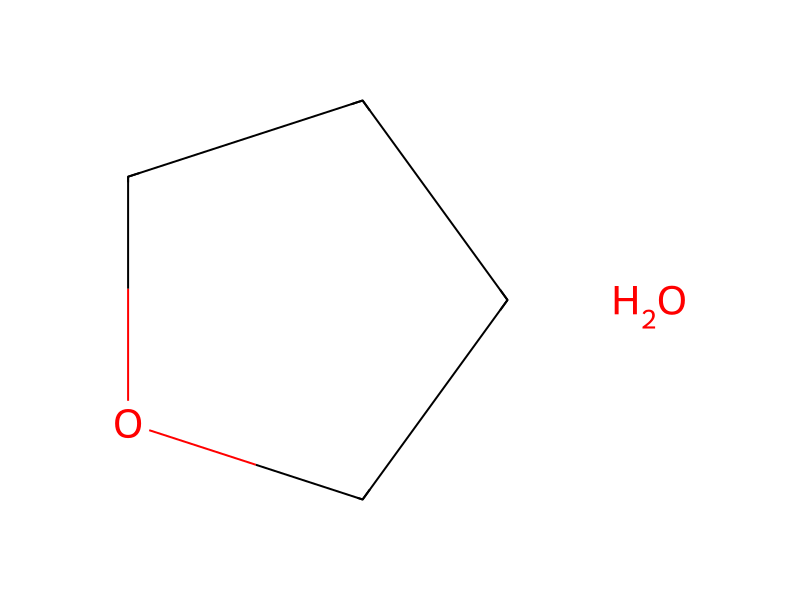
[OH-].[Li+].[CH:3]([N:16]1[CH2:21][CH2:20][N:19]([CH2:22][C:23]([O:25]C)=[O:24])[CH2:18][CH2:17]1)([C:10]1[CH:15]=[CH:14][CH:13]=[CH:12][CH:11]=1)[C:4]1[CH:9]=[CH:8][CH:7]=[CH:6][CH:5]=1>C1COCC1.O>[CH:3]([N:16]1[CH2:17][CH2:18][N:19]([CH2:22][C:23]([OH:25])=[O:24])[CH2:20][CH2:21]1)([C:4]1[CH:9]=[CH:8][CH:7]=[CH:6][CH:5]=1)[C:10]1[CH:11]=[CH:12][CH:13]=[CH:14][CH:15]=1Participants
4
Reactant 2


Product 1

Reagents, catalysts & solvents 1
Procedure
An aqueous solution of lithium hydroxide (486 mg, 11.58 mmol, 2 ml water) was added to a solution of (4-benzhydrylpiperazin-1-yl)-acetic acid, methyl ester (2.5 g, 7.72 mmol) in a 5:1 mixture of THF/water (20 ml). The reaction was stirred at room temperature overnight. THF was removed under reduced pressure. The reaction mixture was partitioned between ethyl acetate and water. The aqueous layer was separated and neutralised to pH7 with 1M HCI. A white gelatinous precipitate of (4-benzhydrylpiperazin-1-yl)-acetic acid was formed which was collected by filtration and dried (1.10 g, 46%).
Workup
- customTHF was removed under reduced pressure
- customThe reaction mixture was partitioned between ethyl acetate and water
- customThe aqueous layer was separated
Sources & evidence
- ORD record
- ord-1a7740a2efd247c5af23dbb58c304180
- Source dataset
- uspto-grants-1998_05
- Patent number
- US05753671
Reaction notes
Loading…