1,4-Cyclohexanediol → t-Butyl (4-hydroxycyclohexyl)acetate
Reaction equation

[OH-].[Na+].[CH:3]1([OH:10])[CH2:8][CH2:7][CH:6](O)[CH2:5][CH2:4]1.Br[CH2:12][C:13]([O:15][C:16]([CH3:19])([CH3:18])[CH3:17])=[O:14]>O.[Br-].C([N+](CCCC)(CCCC)CCCC)CCC>[OH:10][CH:3]1[CH2:4][CH2:5][CH:6]([CH2:12][C:13]([O:15][C:16]([CH3:19])([CH3:18])[CH3:17])=[O:14])[CH2:7][CH2:8]1Participants





Procedure
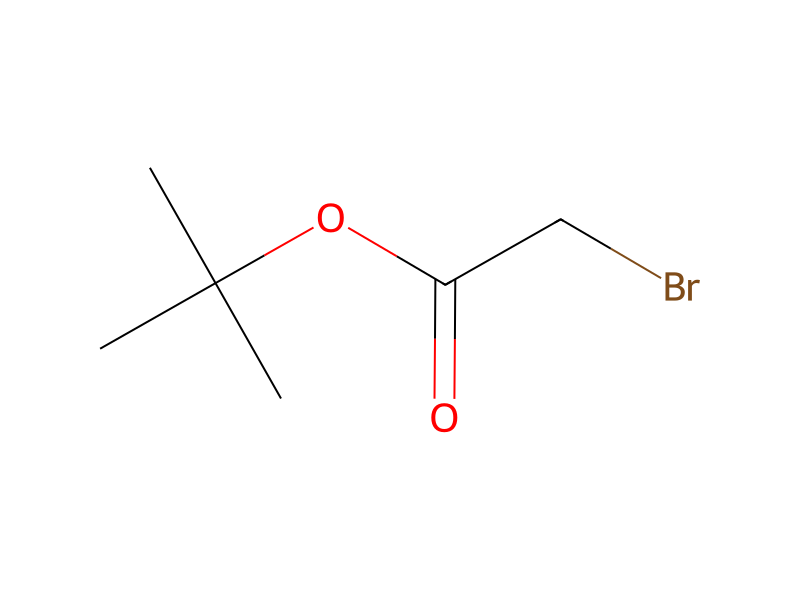
Sodium hydroxide (5.7 g, 0.14 mol) was dissolved in water (6 ml) and 1,4-cyclohexanediol (cis/trans=6/4) (15.0 g, 0.13 mmol) was added, which was followed by stirring at room temperature for 30 minutes. Then, tetrabutylammonium bromide (20.8 g, 0.065 mol) and t-butyl bromoacetate (24.5 ml, 0.13 mol) were added, and the mixture was stirred at room temperature for one hour. The reaction mixture was extracted with ethyl acetate. The extract was dried over anhydrous magnesium sulfate. After filtration, low boiling matters were distilled away from the filtrate under reduced pressure and the residue was purified by silica gel column chromatography (n-hexane/ethyl acetate=5/1-2/1) to give 2.13 g of t-butyl (4-hydroxycyclohexyl)acetate as a transparent oil (7%).
Workup
- stirringthe mixture was stirred at room temperature for one hour
- extractionThe reaction mixture was extracted with ethyl acetate
- dry with materialThe extract was dried over anhydrous magnesium sulfate
- filtrationAfter filtration, low boiling matters
- distillationwere distilled away from the filtrate under reduced pressure
- customthe residue was purified by silica gel column chromatography (n-hexane/ethyl acetate=5/1-2/1)
Sources & evidence
- ORD record
- ord-925a5acc21444eae96d778a11499a759
- Source dataset
- uspto-grants-1998_05
- Patent number
- US05753670
Reaction notes
Loading…