2-Allyl-4-[4-(4-pyridyl)piperazin-1-yl]phenol → 2-n-Propyl-4-[4-(4-pyridyl)piperazin-1-yl]phenol
Reaction equation

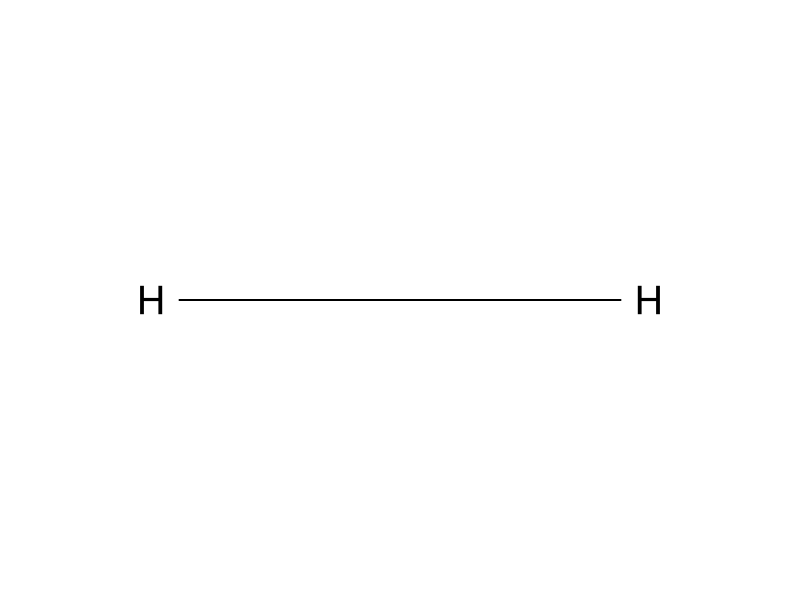
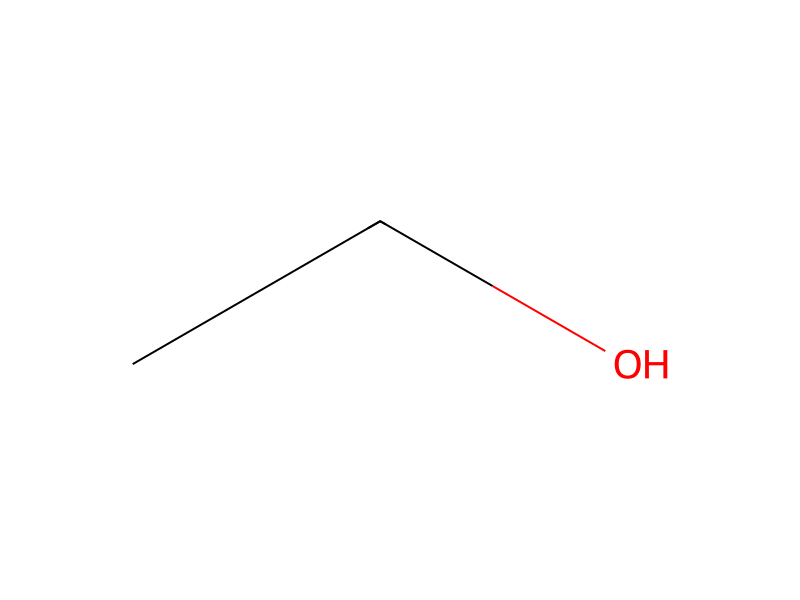
[CH2:1]([C:4]1[CH:9]=[C:8]([N:10]2[CH2:15][CH2:14][N:13]([C:16]3[CH:21]=[CH:20][N:19]=[CH:18][CH:17]=3)[CH2:12][CH2:11]2)[CH:7]=[CH:6][C:5]=1[OH:22])[CH:2]=[CH2:3].[H][H]>C(O)C.Cl.[Pd]>[CH2:1]([C:4]1[CH:9]=[C:8]([N:10]2[CH2:15][CH2:14][N:13]([C:16]3[CH:21]=[CH:20][N:19]=[CH:18][CH:17]=3)[CH2:12][CH2:11]2)[CH:7]=[CH:6][C:5]=1[OH:22])[CH2:2][CH3:3]Participants


Procedure
The product from Example 205, step (ii) (0.74 g) in ethanol (25 ml) and 1N hydrochloric acid (2.5 ml) was hydrogenated at room temperature and atmospheric pressure over 10% palladium charcoal (0.15 g) until uptake of hydrogen was complete. Catalyst was removed by filtration through diatomaceous earth and the filtrate evaporated. The residue was triturated with a mixture of ethyl acetate (25 ml) and saturated sodium bicarbonate solution (25 ml) and the insoluble solid was filtered and washed with water and ethyl acetate. The aqueous layer of the filtrate was extracted twice with dichloromethane and the combined organic extracts evaporated. The residue was combined with the ethyl acetate-insoluble material and treated with boiling ethanol (40 ml), unsoluble material being removed by filtration. Evaportion of the filtrate gave 2-n-propyl-4-[4-(4-pyridyl)piperazin-1-yl]phenol (0.7 g) as a solid NMR (d6DMSO) δ 8.84-8.68(1H,m), 8.18(2H,d), 6.82(2H,m), 6.7(3H,m), 4.1(1H,m), 3.42(4H,t), 3.17(3H,s), 3.05(4H,t), 2.48(DMSO), 1.55(2H,m), 0.89(3H,t).
Workup
- customwas hydrogenated at room temperature
- customCatalyst was removed by filtration through diatomaceous earth
- customthe filtrate evaporated
- customThe residue was triturated with a mixture of ethyl acetate (25 ml) and saturated sodium bicarbonate solution (25 ml)
- filtrationthe insoluble solid was filtered
- washwashed with water and ethyl acetate
- extractionThe aqueous layer of the filtrate was extracted twice with dichloromethane
- customthe combined organic extracts evaporated
- additiontreated with boiling ethanol (40 ml), unsoluble material
- custombeing removed by filtration
Sources & evidence
- ORD record
- ord-a1cccb6fbfcc4964b2deed239ec87d8a
- Source dataset
- uspto-grants-1998_05
- Patent number
- US05753659
Reaction notes
Loading…