Sodium Cyanide → Methyl 5-cyano-2-(4-fluorophenoxy)nicotinate
Reaction equation

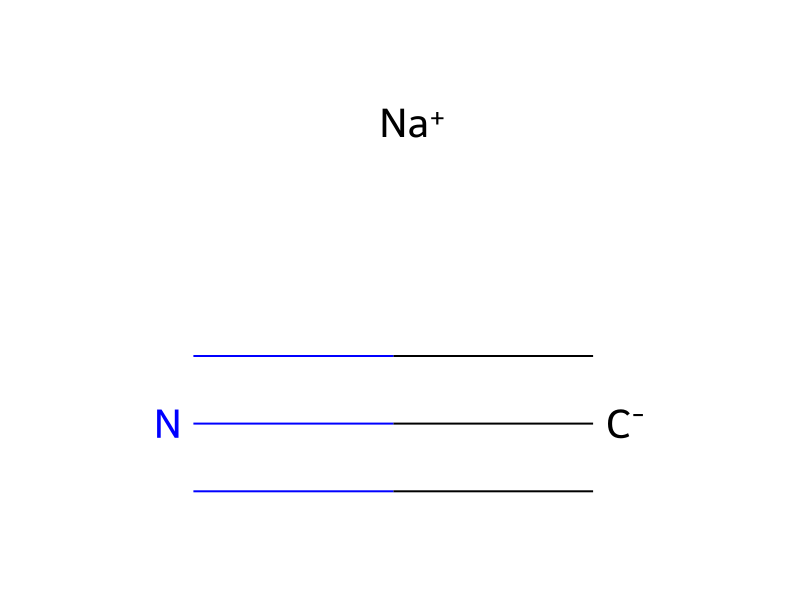
Br[C:2]1[CH:3]=[N:4][C:5]([O:12][C:13]2[CH:18]=[CH:17][C:16]([F:19])=[CH:15][CH:14]=2)=[C:6]([CH:11]=1)[C:7]([O:9][CH3:10])=[O:8].[C-:20]#[N:21].[Na+]>C(#N)CC.[Cu](I)I>[C:20]([C:2]1[CH:3]=[N:4][C:5]([O:12][C:13]2[CH:18]=[CH:17][C:16]([F:19])=[CH:15][CH:14]=2)=[C:6]([CH:11]=1)[C:7]([O:9][CH3:10])=[O:8])#[N:21]Participants
Reactant 2

Product 1

Reagents, catalysts & solvents 2


Procedure
A mixture of methyl 5-bromo-2-(4-fluorophenoxy)nicotinate (step 1, 163 mg, 0.50 mmol), sodium cyanide (49 mg, 1.0 mmol), tetrakis(triphenylphohphine) palladium(0) (29 mg, 0.025 mmol), and copper iodide (9.5 mg, 0.05 mmol) in propionitrile (4.0 mL) was heated under reflux for 4.5 h with stirring. The reaction mixture was filtered through a pad of Celite®. The filtrate was partitioned between water (10 mL) and dichloromethane (30 mL). The organic phase was separated, dried (sodium sulfate), and concentrated. The residue was purified by TLC plate developing with hexane/ethyl acetate (3/1) to afford 97 mg (71%) of the title compound: 1H-NMR (CDCl3) δ 8.5 (2H, m), 7.14 (2H, d, J=1.2 Hz), 7.12 (2H, s), 3.99 (3H, s); MS (ESI) m/z 272 (M+).
Workup
- temperaturewas heated
- temperatureunder reflux for 4.5 h
- filtrationThe reaction mixture was filtered through a pad of Celite®
- customThe filtrate was partitioned between water (10 mL) and dichloromethane (30 mL)
- customThe organic phase was separated
- dry with materialdried (sodium sulfate)
- concentrationconcentrated
- customThe residue was purified by TLC plate
Sources & evidence
- ORD record
- ord-78234e9beb5d4c90a635478c61814a85
- Source dataset
- uspto-grants-2007_07
- Patent number
- US07238714B2
Reaction notes
Loading…