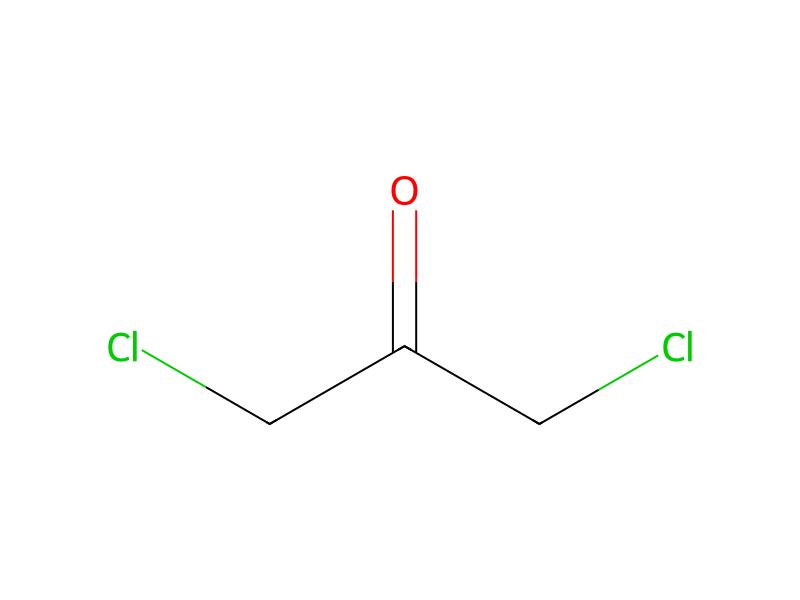
1,3-Dichloroacetone → 4-[2-(4-Chloromethyl-2-oxazolyl)ethyl]-5-methyl-2-phenyloxazole
Reaction equation

[CH3:1][C:2]1[O:6][C:5]([C:7]2[CH:12]=[CH:11][CH:10]=[CH:9][CH:8]=2)=[N:4][C:3]=1[CH2:13][CH2:14][C:15]([NH2:17])=[O:16].[Cl:18][CH2:19][C:20](=O)[CH2:21]Cl.C(=O)([O-])[O-].[K+].[K+]>>[Cl:18][CH2:19][C:20]1[N:17]=[C:15]([CH2:14][CH2:13][C:3]2[N:4]=[C:5]([C:7]3[CH:12]=[CH:11][CH:10]=[CH:9][CH:8]=3)[O:6][C:2]=2[CH3:1])[O:16][CH:21]=1Participants
4



Conditions
- Temperature
- 130 °C
Procedure
A mixture of 3-(5-methyl-2-phenyl-4-oxazolyl)propanamide (10.0 g) and 1,3-dichloro-2-propanone (5.35 g) was stirred at 130° C. for 2 hrs. An aqueous potassium carbonate solution was added to alkalize the reaction mixture and the mixture was extracted with ethyl acetate. The organic layer was washed with saturated brine, and dried over anhydrous magnesium sulfate. The residue was subjected to silica gel column chromatography to give crystals (2.30 g, 18%) of 4-[2-(4-chloromethyl-2-oxazolyl)ethyl]-5-methyl-2-phenyloxazole from a fraction eluted with ethyl acetate-hexane (1:4, v/v). Recrystallization from ethyl acetate-hexane gave colorless prism crystals. melting point: 71-72° C.
Workup
- extractionthe mixture was extracted with ethyl acetate
- washThe organic layer was washed with saturated brine
- dry with materialdried over anhydrous magnesium sulfate
Sources & evidence
- ORD record
- ord-3ba4c36890a8468588265f4c9e0c02b6
- Source dataset
- uspto-grants-2007_07
- Patent number
- US07238716B2
Reaction notes
Loading…