Potassium Carbonate → Hexahydro-1-(3-methyl-4-nitrophenyl)-1H-1,4-diazepine
Reaction equation

F[C:2]1[CH:7]=C[CH:5]=[CH:4][C:3]=1[N+:8]([O-:10])=[O:9].C(=O)([O-])[O-].[K+].[K+].[C:17]([N:20]1[CH2:26][CH2:25][CH2:24][NH:23][CH2:22][CH2:21]1)(=O)[CH3:18]>O>[CH3:5][C:4]1[CH:18]=[C:17]([N:20]2[CH2:26][CH2:25][CH2:24][NH:23][CH2:22][CH2:21]2)[CH:7]=[CH:2][C:3]=1[N+:8]([O-:10])=[O:9]Participants
5
Reactant 3

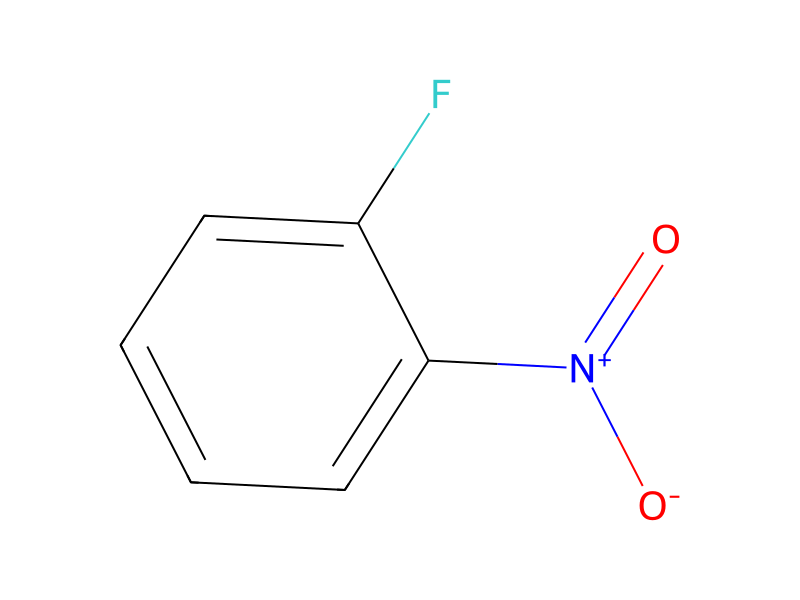

Product 1

Reagents, catalysts & solvents 1

Conditions
- Temperature
- 95 °C
Procedure
Fluoronitrobenzene (9.1 g, 0.0586 mol) is dissolved in water (50 ml) and then potassium carbonate (9.7 9, 0.0703 mol) and 1-acetyl-[1,4]diazepane (10 g, 0.0703 mol) are added. The medium is heated at 95° C. for 6 hours, and an orange-coloured solution is obtained. The medium is then cooled to room temperature, and an orange-coloured sticky paste then appears. The maximum amount of water is removed from the reaction medium. Isopropanol is then added to the paste until a yellow solid precipitates. The medium is filtered and, after drying in a vacuum oven at 45° C., a yellow powder is obtained which corresponds to 1-(3-methyl-4-nitrophenyl)-[1,4]diazepane (1). (8.7 g; Yield=53.6%)
Workup
- customan orange-coloured solution is obtained
- temperatureThe medium is then cooled to room temperature
- customThe maximum amount of water is removed from the reaction medium
- additionIsopropanol is then added to the paste until a yellow solid
- customprecipitates
- filtrationThe medium is filtered
- customafter drying in a vacuum oven at 45° C.
Sources & evidence
- ORD record
- ord-4e180161d1a043528d320aa611ce7a1a
- Source dataset
- uspto-grants-2007_07
- Patent number
- US07241317B2
Reaction notes
Loading…