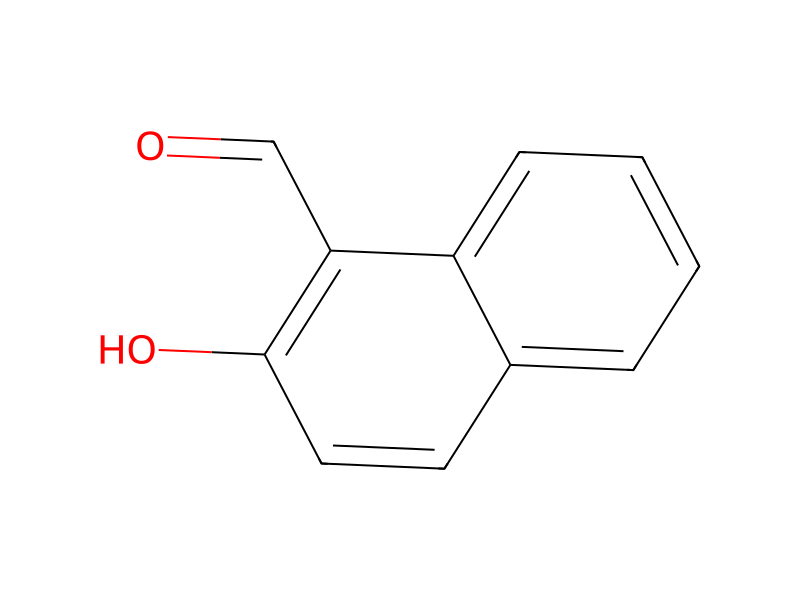
2-Hydroxy-1-naphthaldehyde → HCID 136380447, compound
Reaction equation

[S:1]([C:5]1[CH:10]=[CH:9][C:8]([NH:11][C:12](=[S:15])[NH:13][NH2:14])=[CH:7][CH:6]=1)([OH:4])(=[O:3])=[O:2].[Na].[OH:17][C:18]1[CH:27]=[CH:26][C:25]2[C:20](=[CH:21][CH:22]=[CH:23][CH:24]=2)[C:19]=1[CH:28]=O>>[OH:17][C:18]1[CH:27]=[CH:26][C:25]2[C:20](=[CH:21][CH:22]=[CH:23][CH:24]=2)[C:19]=1[CH:28]=[N:14][NH:13][C:12]([NH:11][C:8]1[CH:7]=[CH:6][C:5]([S:1]([OH:4])(=[O:2])=[O:3])=[CH:10][CH:9]=1)=[S:15]Participants
4



Procedure
The procedure described in example 4 was followed here, using 4-(4-sulfophenyl)-3-thiosemicarbazide, sodium salt in place of 4-(naphth-1-yl)thiosemicarbazide and 2-hydroxy-1-naphthaldehyde in place of 2,4,6-trihydroxybenzaldehyde to give the title compound (23%) as a solid. MS (ES−) m/e 400 [M−H]−.
Sources & evidence
- ORD record
- ord-ae3a96e3451a4ad486dac9ff90b66387
- Source dataset
- uspto-grants-2007_07
- Patent number
- US07241783B2
Reaction notes
Loading…