1,4-Dibenzyl-2-styryl-piperazine → 2-Phenethylpiperazine
Reaction equation

C([N:8]1[CH2:13][CH2:12][N:11](CC2C=CC=CC=2)[CH2:10][CH:9]1[CH:21]=[CH:22][C:23]1[CH:28]=[CH:27][CH:26]=[CH:25][CH:24]=1)C1C=CC=CC=1>[OH-].[Pd+2].[OH-].C(O)C>[CH2:21]([CH:9]1[CH2:10][NH:11][CH2:12][CH2:13][NH:8]1)[CH2:22][C:23]1[CH:24]=[CH:25][CH:26]=[CH:27][CH:28]=1Participants
4


Reagents, catalysts & solvents 2

Conditions
- Temperature
- 60 °C
Procedure
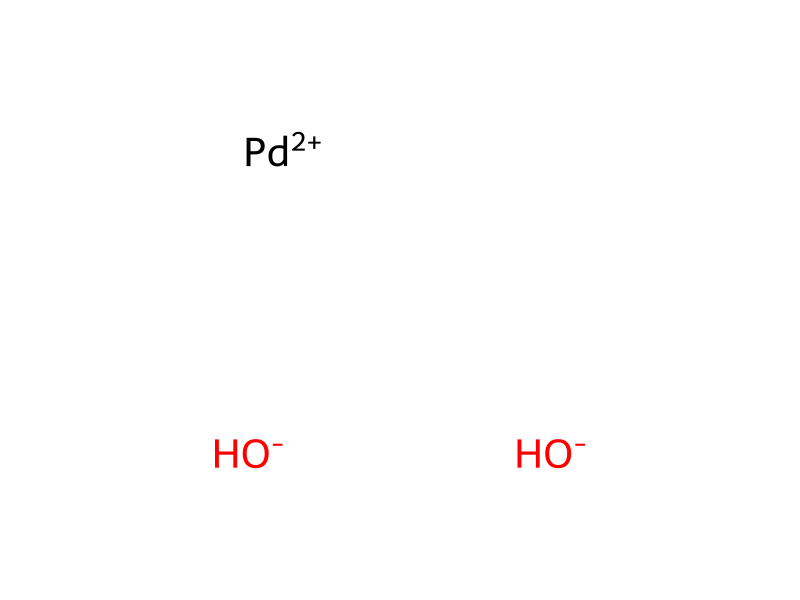
Combine 1,4-dibenzyl-2-styryl-piperazine (289 mg, 0.78 mmol), palladium hydroxide (36 mg, 20 wt. % on carbon), and ethanol (100 mL) in a hydrogenation vessel. Shake and heat at 60° C. under a hydrogen atmosphere (60 psi). After 24 hours, cool to ambient temperature and filter the palladium hydroxide. Concentrate the filtrate and purify by silica gel chromatography using 2N ammonia in methanol-methylene chloride (20%) as the eluent to give the title compound: mass spectrum (ion spray): m/z=191 (M+1); 1H NMR (DMSO-d6): δ7.11–7.31 (m, 5H), 2.82–2.39 (m, 8H), 2.18 (dd, 1H), 1.48 (dd, 2H).
Workup
- temperaturecool to ambient temperature
- filtrationfilter the palladium hydroxide
- concentrationConcentrate the filtrate
- custompurify by silica gel chromatography
Sources & evidence
- ORD record
- ord-745d89939e844a4b93a73c033401be7d
- Source dataset
- uspto-grants-2007_05
- Patent number
- US07214673B2
Reaction notes
Loading…