4-Nitrophenol → 4-(2-Hydroxy-1-decyloxy)nitrobenzene
Reaction equation

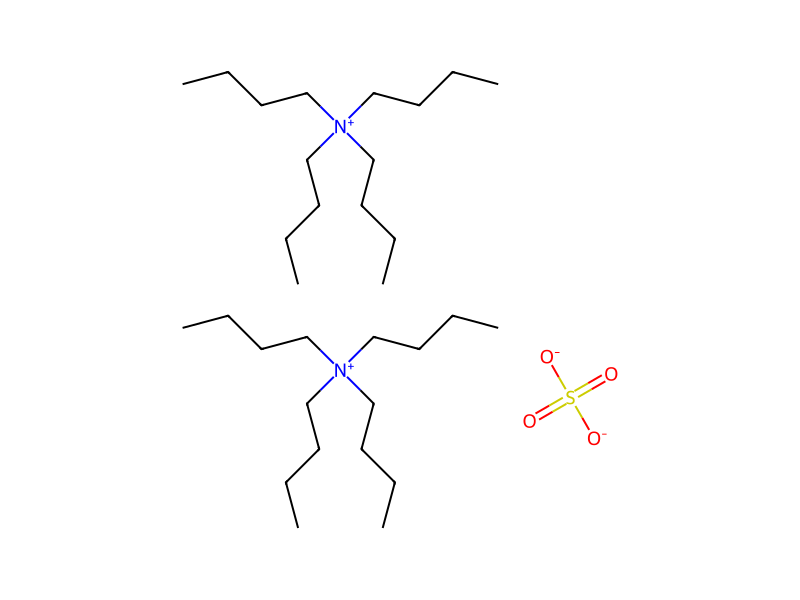
[Na].[N+:2]([C:5]1[CH:10]=[CH:9][C:8]([OH:11])=[CH:7][CH:6]=1)([O-:4])=[O:3].C1(C)C=CC=CC=1.[O:19]1[CH:21]([CH2:22][CH2:23][CH2:24][CH2:25][CH2:26][CH2:27][CH2:28][CH3:29])[CH2:20]1>O.S([O-])([O-])(=O)=O.C([N+](CCCC)(CCCC)CCCC)CCC.C([N+](CCCC)(CCCC)CCCC)CCC>[OH:19][CH:21]([CH2:22][CH2:23][CH2:24][CH2:25][CH2:26][CH2:27][CH2:28][CH3:29])[CH2:20][O:11][C:8]1[CH:9]=[CH:10][C:5]([N+:2]([O-:4])=[O:3])=[CH:6][CH:7]=1Participants
7






Conditions
- Temperature
- 100 °C
Procedure
The sodium salt of 4-nitrophenol (28.19 g, 0.175 mol) was dissolved in water (50 mL) and toluene (300 mL) and tetrabutylammonium sulfate (6.0 g) was added. 1,2-Epoxydecane (27.3 g, 0.175 mol) was added to this mixture and the reaction was heated at 100° C. for 5 days. The toluene layer was separated and washed with water (4×75 mL), 1N hydrochloric acid (2×75 mL) and water (75 mL). The organic layer was dried over sodium sulfate, filtered and the solvent removed. The crude product was purified by silica gel chromatography (2–3% methanol/methylene chloride) to afford 4-(2-hydroxy-1-decyloxy)nitrobenzene as a pale oil (20 g, 0.68 mol, 39% yield).
Workup
- customThe toluene layer was separated
- washwashed with water (4×75 mL), 1N hydrochloric acid (2×75 mL) and water (75 mL)
- dry with materialThe organic layer was dried over sodium sulfate
- filtrationfiltered
- customthe solvent removed
- customThe crude product was purified by silica gel chromatography (2–3% methanol/methylene chloride)
Sources & evidence
- ORD record
- ord-31ee2f2d87a542248e8344840fc7a56f
- Source dataset
- uspto-grants-2007_05
- Patent number
- US07220868B2
Reaction notes
Loading…