Cyanogen Bromide → HCID 21101963, compound
Reaction equation

[Cl:1][C:2]1[CH:11]=[C:10]2[C:5]([C:6]([N:12]3[CH2:17][CH2:16][NH:15][CH2:14][CH2:13]3)=[CH:7][CH:8]=[N:9]2)=[CH:4][CH:3]=1.C([O-])(O)=O.[Na+].[N:23]#[C:24]Br>CCO>[Cl:1][C:2]1[CH:11]=[C:10]2[C:5]([C:6]([N:12]3[CH2:17][CH2:16][N:15]([C:24]#[N:23])[CH2:14][CH2:13]3)=[CH:7][CH:8]=[N:9]2)=[CH:4][CH:3]=1Participants
5
Reactant 3
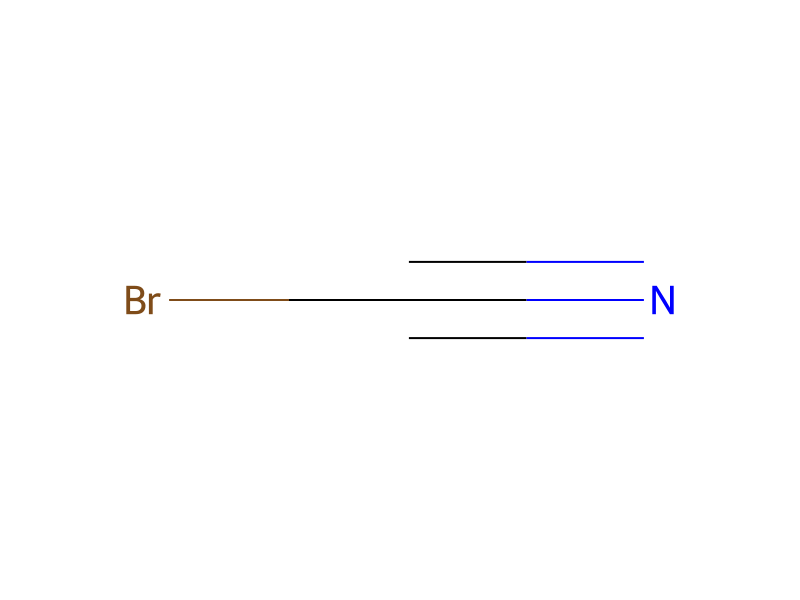


Product 1

Reagents, catalysts & solvents 1

Procedure
A suspension of 7-Chloro-4-(piperazin-1-yl)quinoline (496 mg, 2.0 mmol) and NaHCO3 (504 mg, 6.0 mmol) in EtOH is treated with cyanogen bromide (5 M in MeCN, 440 μL, 2.2 mmol) and stirred at room temp. for 2 h. The solvent is removed, and the residue suspended in CH2Cl2 and filtered. The filtrate is concentrated, and the residue is purified by column chromatography with hexane-EtOAc giving 221 mg of the product as a colorless solid.
Workup
- customThe solvent is removed
- filtrationfiltered
- concentrationThe filtrate is concentrated
- customthe residue is purified by column chromatography with hexane-EtOAc giving 221 mg of the product as a colorless solid
Sources & evidence
- ORD record
- ord-bf21191589a6460e93b4d78500ec55e5
- Source dataset
- uspto-grants-2007_05
- Patent number
- US07220856B2
Reaction notes
Loading…