2-Bromotoluene → Biphenyl
Reaction equation

B(O)O.Br[C:5]1[CH:10]=[CH:9][CH:8]=[CH:7][C:6]=1[CH3:11]>[Pd].C1(P(C2C=CC=CC=2)C2C=CC=CC=2)C=CC=CC=1.C1(P(C2C=CC=CC=2)C2C=CC=CC=2)C=CC=CC=1.C1(P(C2C=CC=CC=2)C2C=CC=CC=2)C=CC=CC=1.C1(P(C2C=CC=CC=2)C2C=CC=CC=2)C=CC=CC=1>[C:6]1([C:11]2[CH:9]=[CH:10][CH:5]=[CH:6][CH:7]=2)[CH:7]=[CH:8][CH:9]=[CH:10][CH:5]=1Participants
4
Reactant 2

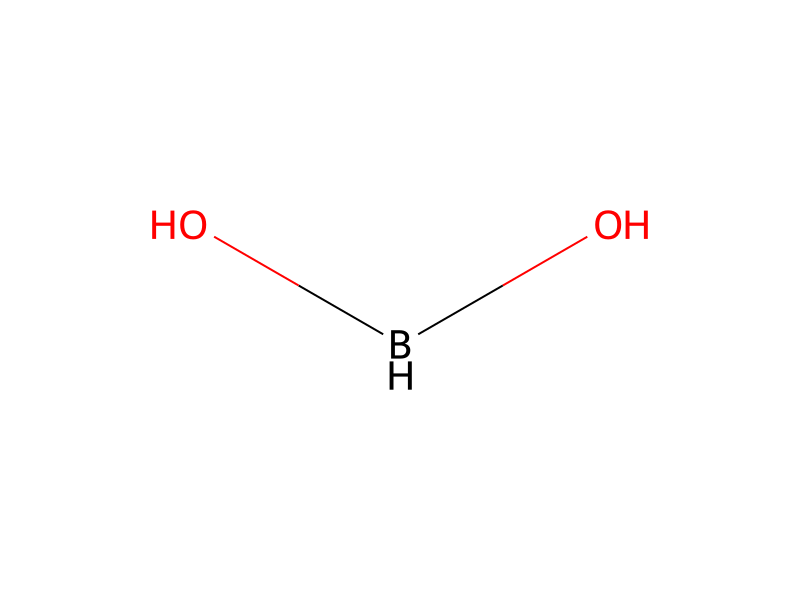
Product 1

Reagents, catalysts & solvents 1

Procedure
Cyclization substrate 5 is synthesized in FIG. 1. The Suzuki reaction is iterated, first by coupling 1,3-dimethoxyphen-2-yl boronic acid with 2-bromotoluene with tetrakis(triphenylphosphine) palladium catalysis to give biphenyl compound 1. Regioselective bromination of 1 gave 2, followed by Suzuki reaction with pyridine-3-boronic acid under palladium catalysis to yield 3. Demethylation of 3 with hydrobromic acid and acetic acid gave 4, followed by Friedel-Crafts acylation with 2,5-dichlorotrimellitic anhydride to yield 5.
Workup
- customCyclization substrate 5 is synthesized in FIG. 1
- customThe Suzuki reaction
Sources & evidence
- ORD record
- ord-f424cb1166df4f0fba75b19f91deb8c4
- Source dataset
- uspto-grants-2007_05
- Patent number
- USRE039663E1
Reaction notes
Loading…