Pyridine → HCID 131726469, compound
Reaction equation

[NH:1]([C:33]([O:35][CH2:36][CH:37]=[CH2:38])=[O:34])[C@@H:2]([C:4]([NH:6][C@H:7]([C:15]([NH:17][C@H:18]([C:30]([OH:32])=[O:31])[CH2:19][CH2:20][CH2:21][CH2:22][NH:23][C:24]([O:26][CH2:27][CH:28]=[CH2:29])=[O:25])=[O:16])[CH2:8][C:9]1[CH:14]=[CH:13][CH:12]=[CH:11][CH:10]=1)=[O:5])[CH3:3].[CH3:39][C:40]([NH:51][CH2:52][CH:53]([OH:69])[CH2:54][O:55][C:56]1[C:61]2[C:62]3[C:67]([NH:68][C:60]=2[CH:59]=[CH:58][CH:57]=1)=[CH:66][CH:65]=[CH:64][CH:63]=3)([C:42]1[CH:47]=[CH:46][C:45]([N:48]=[N+:49]=[N-:50])=[CH:44][CH:43]=1)[CH3:41].C1C(C(O)=O)=CC=C(N)C=1.N1C=CC=CC=1.ClC(OC1C=CC([N+]([O-])=O)=CC=1)=O>O1CCCC1.ClCCl>[NH:1]([C:33]([O:35][CH2:36][CH:37]=[CH2:38])=[O:34])[C@@H:2]([C:4]([NH:6][C@H:7]([C:15]([NH:17][C@H:18]([C:30]([OH:32])=[O:31])[CH2:19][CH2:20][CH2:21][CH2:22][NH:23][C:24]([O:26][CH2:27][CH:28]=[CH2:29])=[O:25])=[O:16])[CH2:8][C:9]1[CH:10]=[CH:11][CH:12]=[CH:13][CH:14]=1)=[O:5])[CH3:3].[CH3:41][C:40]([NH:51][CH2:52][CH:53]([OH:69])[CH2:54][O:55][C:56]1[C:61]2[C:62]3[C:67]([NH:68][C:60]=2[CH:59]=[CH:58][CH:57]=1)=[CH:66][CH:65]=[CH:64][CH:63]=3)([C:42]1[CH:47]=[CH:46][C:45]([N:48]=[N+:49]=[N-:50])=[CH:44][CH:43]=1)[CH3:39].[CH3:41][C:40]([NH:51][CH2:52][CH:53]([OH:69])[CH2:54][O:55][C:56]1[C:61]2[C:62]3[C:67]([NH:68][C:60]=2[CH:59]=[CH:58][CH:57]=1)=[CH:66][CH:65]=[CH:64][CH:63]=3)([C:42]1[CH:47]=[CH:46][C:45]([N:48]=[N+:49]=[N-:50])=[CH:44][CH:43]=1)[CH3:39]Participants
Reactant 3


Product 1

Reagents, catalysts & solvents 1

Procedure
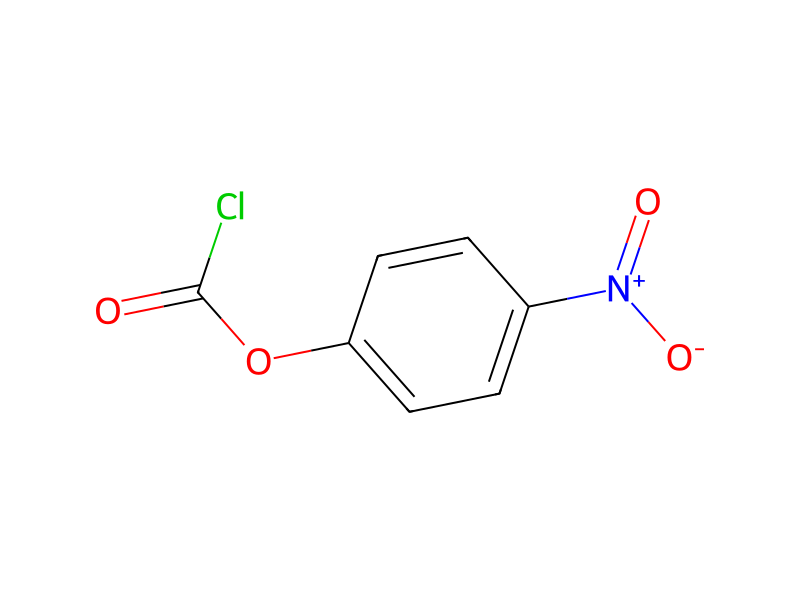
A solution of 80.2 mg (102 μmol) of compound 17, pyridine (25 μl, 3.0 eq.) and 4-nitrophenyl chloroformate (44.3 mg, 220 μmol) in dry tetrahydrofuran/dichloromethane was stirred under an Argon atmosphere at 0° C. for two hours and overnight at room temperature. The solution was evaporated in vacuo and the residual product was dissolved in dichloromethane. After washing the organic layer with brine and 0.5 N potassium bisulfate, the organic layer was dried over anhydrous sodium sulfate and concentrated to dryness. The resulting crude product was subjected to column chromatography (SiO2—CHCl3/MeOH 20/1) to obtain 61.9 mg (84%) of compound 18. M.P. 69–70° C.; 1H-NMR (300 MHz, CDCl3/CD3OD): δ 1.23 (d, 3H, 3J=7.0 Hz, CH3-Ala), 1.10–2.08 (m, 6H, 3 CH2-Lys), 3.04 (m, 1H, benzylic), 3.13 (m, 2H, N—CH2-Lys), 3.27 (bd, 1H, benzylic), 4.06 (m, 1H, Hα), 4.26 (m, 1H, Hα), 4.35–4.70 (m, 5H, Hα and Aloc), 5.04–5.47 (m, 4H, Aloc), 5.14 (s, 2H, benzylic-spacer), 5.24 (s, 2H, benzylic-spacer), 5.72 (m, 1H, Aloc), 5.90 (m, 1H, Aloc), 7.10–7.46 (m, 13H, aromatic), 7.65 (d, 2H, 3J=8.3 Hz, aromatic), 8.27 (d, 2H, 3J=9.1 Hz, aromatic-PNP) ppm; MS (FAB) m/e 952 (M+H)+, 974 (M+Na)+; C40H46O12 (.¼H2O) calculated C, 59.51%; H, 5.81%; N, 10.41%; measured C 59.52%; H, 5.54%; N, 10.12%.
Workup
- customThe solution was evaporated in vacuo
- dissolutionthe residual product was dissolved in dichloromethane
- washAfter washing the organic layer with brine and 0.5 N potassium bisulfate
- dry with materialthe organic layer was dried over anhydrous sodium sulfate
- concentrationconcentrated to dryness
Sources & evidence
- ORD record
- ord-bc5ad02019af49ffacd22a222c690f69
- Source dataset
- uspto-grants-2007_05
- Patent number
- US07223837B2
Reaction notes
Loading…