Methyl morpholine oxide → Ethyl 4-oxocyclohexanecarboxylate
Reaction equation

[OH:1][CH:2]1[CH2:7][CH2:6][CH:5]([C:8]([O:10][CH2:11][CH3:12])=[O:9])[CH2:4][CH2:3]1.C[N+]1([O-])CCOCC1>C(#N)C.[Ru]([O-])(=O)(=O)=O.C([N+](CCC)(CCC)CCC)CC>[O:1]=[C:2]1[CH2:7][CH2:6][CH:5]([C:8]([O:10][CH2:11][CH3:12])=[O:9])[CH2:4][CH2:3]1Participants
5
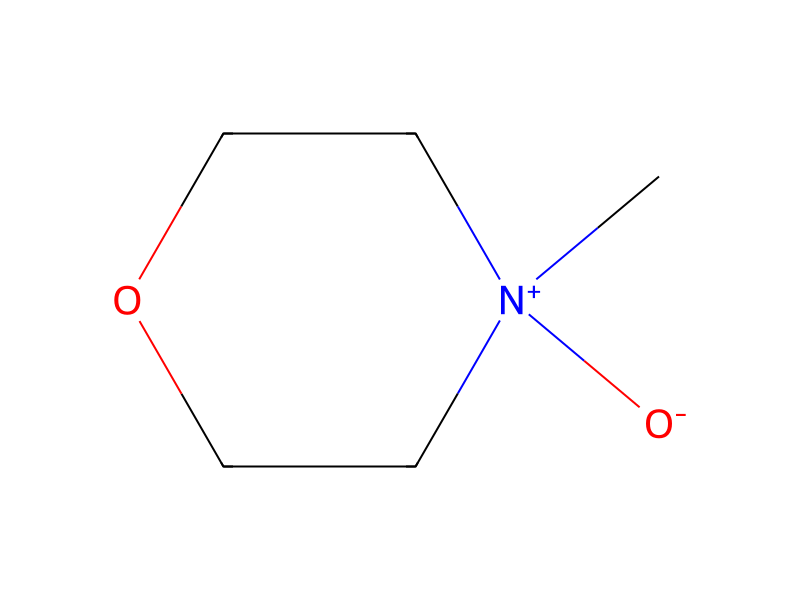


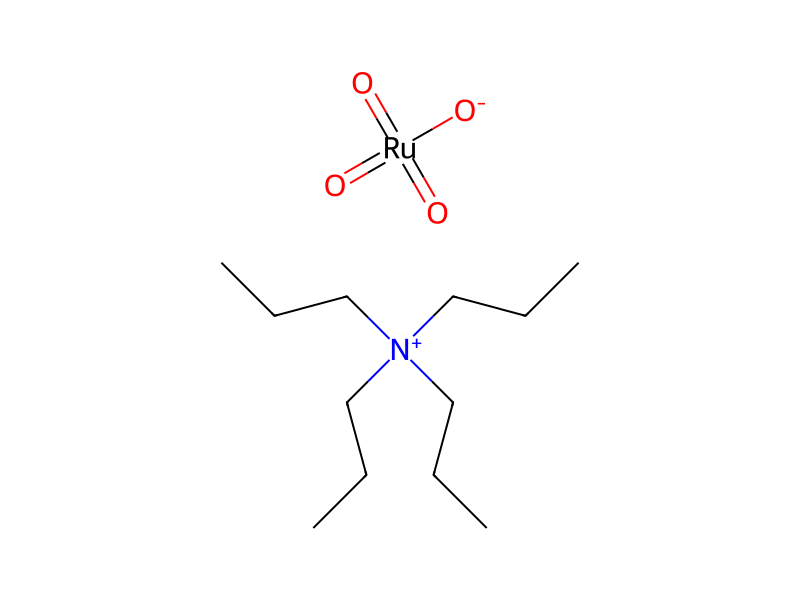

Procedure
To a vigorously stirring suspension of ethyl 4-hydroxycyclohexanecarboxylate (2.0 g, 12 mmol, Aldrich) and activated 4 Å MS (1.0 g) in acetonitrile (70 mL) at 23° C. was sequentially added 4-methylmorpholine-N-oxide (2.0 g, 17 mmol) and tetrapropylammonium perruthenate (410 mg, 1.2 mmol). After stirring the resulting black suspension for 30 min, the mixture was concentrated in vacuo, and the resulting residue was filtered through a plug of silica gel (30% ethyl acetate in hexanes) to provide ethyl 4-oxocyclohexanecarboxylate as a clear oil (1.93 g, 98%). MS (AP CI) 171 (M+H).
Workup
- stirringAfter stirring the resulting black suspension for 30 min
- concentrationthe mixture was concentrated in vacuo
- filtrationthe resulting residue was filtered through a plug of silica gel (30% ethyl acetate in hexanes)
Sources & evidence
- ORD record
- ord-ddd1866516144f2888f2bf78b3582a57
- Source dataset
- uspto-grants-2003_07
- Patent number
- US06586446B1
Reaction notes
Loading…